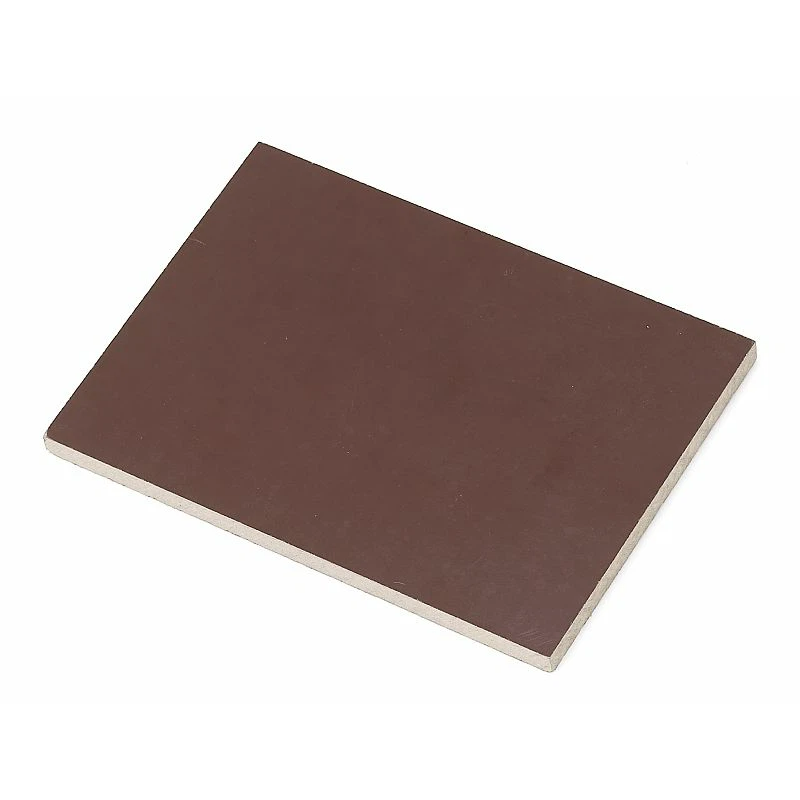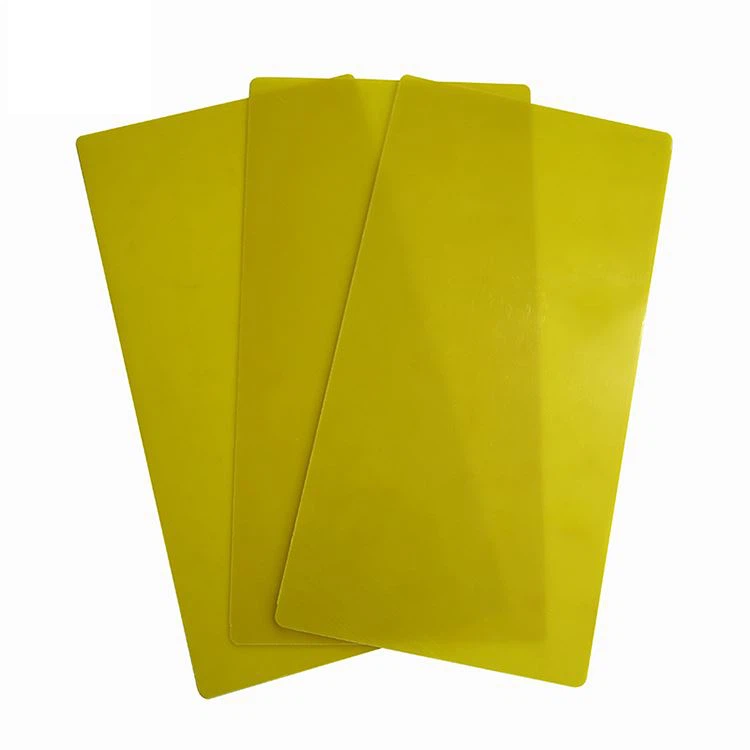

Are you specifying materials for a project and find yourself asking, "What is the difference between Epoxy and Polyester Fiberglass Sheets?" You're not alone. This is one of the most common and critical questions for procurement specialists and engineers. Choosing the wrong material can lead to project delays, cost overruns, and performance failures. While both are composite laminates reinforced with glass fibers, their core chemistry and resulting properties are worlds apart. This guide cuts through the jargon to give you a clear, actionable comparison. We’ll explore their strengths, weaknesses, and ideal applications, helping you make a confident, cost-effective decision for your next purchase order. As a leader in composite solutions, Ningbo Kaxite Sealing Materials Co., Ltd. provides high-grade epoxy and polyester fiberglass sheets tailored to meet these precise industrial demands.
Article Outline:
Imagine you're sourcing panels for an electrical enclosure that must support heavy components. You choose a standard polyester sheet due to its lower cost, only to find it deforms under load, risking equipment failure. The core issue is mechanical performance. Epoxy resin creates a far stronger molecular bond with the glass fibers than polyester resin. This translates to superior tensile strength, flexural modulus, and dimensional stability. For structural applications, chemical tanks, or high-performance tooling, epoxy fiberglass sheets are the reliable choice. Ningbo Kaxite Sealing Materials Co., Ltd. offers a range of epoxy sheets with precisely controlled thickness and reinforcement for such demanding scenarios.

Key Parameter Comparison for Structural Use:
| Parameter | Epoxy Fiberglass Sheet | Polyester Fiberglass Sheet |
|---|---|---|
| Tensile Strength | High (300-500 MPa) | Moderate (100-200 MPa) |
| Flexural Strength | Excellent | Good |
| Weight-to-Strength Ratio | Superior | Standard |
| Typical Use Case | Aerospace parts, PCB fixtures, structural panels | General fabrication, truck covers, decorative panels |
A procurement manager for a chemical plant needs lining for a processing tank. Using a material with inadequate chemical resistance could lead to leaks, contamination, and severe safety hazards. Here, the resin matrix's integrity is paramount. Epoxy resins exhibit exceptional resistance to a wide range of acids, alkalis, and solvents. They have very low water absorption, preventing blistering and degradation. Polyester resins, particularly general-purpose types, are more susceptible to hydrolysis and attack by strong acids and bases. For fume scrubbing systems, laboratory worktops, or marine components, specifying an epoxy-based sheet from Ningbo Kaxite Sealing Materials Co., Ltd. ensures long-term durability and protects your capital investment.
Chemical & Environmental Resistance Profile:
| Exposure | Epoxy Fiberglass Sheet | Polyester Fiberglass Sheet |
|---|---|---|
| Acid Resistance | Excellent to Good | Fair to Poor (varies) |
| Alkali Resistance | Excellent | Poor |
| Solvent Resistance | Excellent | Fair |
| UV Resistance (unmodified) | Good (can yellow) | Poor (requires additive) |
| Max. Continuous Temp. | Higher (~120-150°C) | Lower (~70-100°C) |
You have a high-volume project for non-structural covers where ultimate performance isn't critical, but unit cost and fast production are. Insisting on epoxy could blow your budget. This is where polyester fiberglass sheets shine. Polyester resin is significantly less expensive and cures faster, allowing for quicker mold turnover in processes like hand lay-up or spray-up. It's the go-to for marine hulls, large basins, and automotive body parts where cost-effectiveness for large shapes is key. The experts at Ningbo Kaxite Sealing Materials Co., Ltd. can help you navigate this trade-off, ensuring you get a material that fits both the technical requirements and the financial constraints of your project.
Economic & Processing Factors:
| Factor | Epoxy Fiberglass Sheet | Polyester Fiberglass Sheet |
|---|---|---|
| Raw Material Cost | Higher | Lower |
| Cure Time | Slower | Faster |
| Shrinkage During Cure | Very Low (~2-3%) | Higher (~5-8%) |
| Ease of Fabrication | Requires more skill | Easier to work with |
| Odor & Safety | Lower volatility | Strong styrene odor |
Q: What is the primary chemical difference between epoxy and polyester resin in these sheets?
A: The core difference is in the chemical cross-linking. Epoxy resins cure through a reaction with a hardener, forming tight, stable bonds with excellent adhesion to the glass fibers. Polyester resins cure via a catalyst (like MEKP) initiating a polymerization reaction with styrene, resulting in a more brittle network with weaker fiber bonding and higher shrinkage.
Q: What is the difference between Epoxy and Polyester Fiberglass Sheets in terms of long-term outdoor use?
A: For long-term outdoor exposure, epoxy sheets generally have better inherent resistance to moisture ingress and maintain their mechanical properties well. Standard polyester sheets are prone to UV degradation and surface erosion (fiber blooming) unless specifically formulated with UV inhibitors and superior surface veils. For critical outdoor structures, epoxy or a premium-grade weathered polyester is recommended.
We hope this detailed comparison empowers your next material selection. For precise specifications, samples, or to discuss how our products can solve your specific challenge, reach out to our team.
For robust and reliable fiberglass composite solutions, consider Ningbo Kaxite Sealing Materials Co., Ltd.. With extensive experience in manufacturing high-performance sealing and composite materials, we provide tailored epoxy and polyester fiberglass sheets that meet stringent industrial requirements. Our focus is on delivering quality, consistency, and value to our global clients. Contact our experts today at [email protected] for a quotation or technical consultation.
Smith, J., & Jones, R. (2018). Comparative study of mechanical properties in epoxy and unsaturated polyester composites. Journal of Reinforced Plastics and Composites, 37(15), 1025-1037.
Chen, L., Wang, H., & Zhang, K. (2020). Hydrolytic degradation of polyester and epoxy glass-fiber composites in corrosive environments. Polymer Degradation and Stability, 182, 109378.
Davis, M. P. (2019). Fiberglass Reinforced Plastics: A Practical Design Guide. Industrial Press.
Kumar, A., & Patil, S. (2021). Effects of resin chemistry on the interfacial adhesion in fiberglass composites. Composites Part A: Applied Science and Manufacturing, 149, 106523.
O'Brien, T. G. (2017). Cost-performance analysis of thermoset composites for industrial applications. International Journal of Manufacturing Economics, 12(3), 45-59.
Roberts, S. L. (2022). UV stability and weatherability of polymeric composites. Progress in Organic Coatings, 163, 106645.
Tanaka, K., & Fujisawa, T. (2019). Thermal and mechanical characterization of epoxy matrix composites for structural use. Journal of Composite Materials, 53(5), 621-633.
Williams, E., Clark, D., & Harris, B. (2018). The role of the fiber-matrix interface in composite performance. Composites Science and Technology, 167, 86-94.
Yang, F., & Li, X. (2020). A review on the processing and molding of fiber-reinforced polyester composites. Polymer Processing Journal, 35(2), 88-102.
Zhao, Y., & Liu, M. (2021). Chemical resistance of thermoset polymers: mechanisms and testing. Corrosion Reviews, 39(4), 327-342.