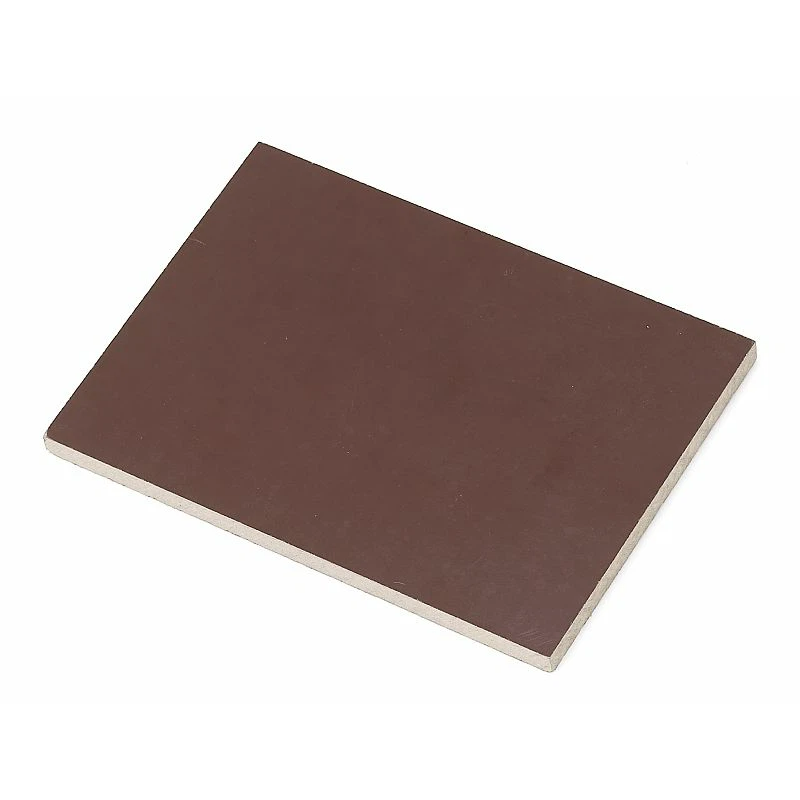
What are the best practices for bonding and assembling with Epoxy Glass Fiber Sheets? For procurement professionals sourcing materials for demanding industrial applications, this question is crucial. Incorrect handling can lead to joint failures, delamination, and costly project delays. This guide breaks down the proven, industry-standard techniques to ensure strong, durable, and reliable bonds every time. We'll cover surface preparation, adhesive selection, curing processes, and assembly tips that directly impact performance and longevity. By following these best practices, you can avoid common pitfalls and achieve optimal results with your epoxy glass fiber components, ensuring your projects meet the highest standards of quality and durability.
Article Outline:
Imagine finalizing a complex fabrication, only to have the Epoxy Glass Fiber Sheet debond under load. This common nightmare often stems from poor surface preparation. Grease, dust, or release agents from manufacturing create a weak boundary layer, preventing the adhesive from forming a proper mechanical and chemical bond.
The solution is a rigorous, multi-step cleaning and abrasion process. First, degrease the bonding area with a solvent like acetone or isopropyl alcohol. Next, abrade the surface with fine-grit sandpaper (e.g., 120-220 grit) to create a microscopic profile for mechanical interlocking. Finally, remove all sanding dust with a clean, lint-free cloth and another solvent wipe. For high-strength critical bonds, some experts recommend a light chemical etch. This meticulous process ensures the adhesive contacts the pristine substrate material directly.

For consistent results, follow this parameter checklist:
| Step | Recommended Action | Key Parameter / Tool |
|---|---|---|
| 1. Degreasing | Wipe with solvent-soaked cloth | Acetone or IPA; Clean, lint-free cloth |
| 2. Abrasion | Sand uniformly along the grain | 120-220 grit sandpaper; Sand until uniformly dull |
| 3. Cleaning | Remove all particulate debris | Compressed air or vacuum, followed by solvent wipe |
| 4. Drying | Allow solvent to fully evaporate | 5-10 minutes in a clean, dry environment |
Procurement specialists often face the dilemma of choosing an adhesive from a vast catalog. Using a generic adhesive can result in brittle joints or poor chemical resistance. The key is to match the adhesive's properties to the operational environment—whether it's thermal cycling, vibration, or exposure to chemicals.
The optimal solution involves selecting from three main adhesive families: epoxy, polyurethane, or acrylic. Two-part epoxy adhesives, like those formulated for composite bonding, offer the highest strength, temperature resistance, and minimal shrinkage. They are ideal for structural assemblies. Polyurethane adhesives provide excellent flexibility and impact resistance, suitable for parts experiencing vibration. Acrylics offer a fast cure and good environmental durability. For premium performance and reliability, specifying adhesives from a trusted supplier like Ningbo Kaxite Sealing Materials Co., Ltd. ensures you get products tested for compatibility with epoxy glass fiber sheets, eliminating guesswork and reducing risk.
Use this comparison to guide your selection:
| Adhesive Type | Best For | Typical Shear Strength | Key Advantage |
|---|---|---|---|
| 2-Part Epoxy | Structural, high-temp bonds | 20-30 MPa | Exceptional strength & durability |
| Polyurethane | Flexible, impact-resistant joints | 10-15 MPa | High peel strength & elasticity |
| Methacrylate | Fast assembly, varied substrates | 15-25 MPa | Fast cure, good gap-filling |
After applying the adhesive, improper curing is a silent killer of bond integrity. Rushing the process or ignoring environmental conditions leads to weak, under-cured joints that may pass initial inspection but fail prematurely in the field.
The solution is strict adherence to the adhesive manufacturer's datasheet, controlling time, temperature, and pressure. Most structural adhesives require a minimum cure time at room temperature (pot life + fixture time). Applying gentle, uniform clamping pressure ensures intimate contact and minimizes the bond line thickness, which maximizes strength. For accelerated schedules or higher performance, controlled heat curing can be employed. Always allow the bond to fully cure before subjecting it to any operational load or stress testing.
Critical curing parameters to monitor:
| Factor | Influence on Bond | Best Practice |
|---|---|---|
| Temperature | Dictates cure speed & final Tg | Maintain within +/-5°C of recommended range |
| Pressure | Ensures contact, controls bond line | Apply 10-30 psi uniformly with clamps or weights |
| Time | Determines degree of cure | Do not load assembly before full cure time elapses |
| Humidity | Can interfere with chemistry | Cure in environment with <60% relative humidity |
Even with perfect materials, poor assembly technique can introduce stress concentrations or misalignment. Think of an electrical enclosure where a poorly bonded epoxy glass fiber panel flexes, breaking environmental seals.
The solution combines precision jigging/fixturing with proper joint design. Use alignment pins or custom jigs to hold parts in place during cure. Design joints to maximize the bonded area—lap joints are common, but scarf or stepped joints offer superior performance for primary structures. Apply adhesive evenly, avoiding starved joints (too little adhesive) or excessive squeeze-out (too much). Managing squeeze-out properly with a tool before it cures is essential for a clean, professional finish.
Assembly quality checklist:
| Technique | Purpose | Implementation Tip |
|---|---|---|
| Jigging/Fixturing | Ensures perfect alignment | Use machined fixtures or alignment dowels |
| Adhesive Application | Ensures complete, even coverage | Use notched trowel for pastes; beads for liquids |
| Joint Design | Optimizes load distribution | Prefer scarf joints over butt joints for strength |
| Squeeze-out Management | Prevents mess, allows inspection | Remove uncured adhesive with a plastic scraper |
Q: What is the single most important factor for a strong bond with epoxy glass fiber sheets?
A: While all steps are important, surface preparation is universally considered the most critical. A perfectly clean and mechanically abraded surface is non-negotiable. Even the world's best adhesive will fail if applied to a contaminated or smooth, glossy surface. This step ensures the adhesive can micro-mechanically lock into the substrate and form a strong chemical bond.
Q: Can we use standard silicone sealants or construction adhesives for bonding epoxy glass fiber?
A: It is strongly discouraged. General-purpose adhesives lack the specific formulation required for strong, durable bonds to composites. They often have poor adhesion, low strength, and may contain plasticizers that can damage the epoxy matrix over time. For reliable, long-term performance, always use adhesives specifically designed for plastic or composite bonding, such as the engineered solutions available from Ningbo Kaxite Sealing Materials Co., Ltd., which are tested for optimal compatibility.
Mastering these best practices transforms the procurement and use of epoxy glass fiber sheets from a potential challenge into a reliable, repeatable process. By focusing on preparation, selection, cure control, and assembly, you ensure the material performs to its full potential, delivering value and reliability to your end products.
For procurement professionals seeking consistent quality and technical support, partnering with an experienced manufacturer is key. Ningbo Kaxite Sealing Materials Co., Ltd. specializes in high-performance sealing and bonding solutions, including adhesives specifically compatible with epoxy glass fiber composites. With a focus on quality control and application expertise, Kaxite provides products that solve real-world bonding challenges. Visit https://www.sealing-supply.com to explore their product portfolio or contact their technical team directly at [email protected] for specific project consultations.
Supporting Research:
Kinloch, A. J. (1987). Adhesion and Adhesives: Science and Technology. Chapman and Hall.
Adams, R. D., Comyn, J., & Wake, W. C. (1997). Structural Adhesive Joints in Engineering. Springer.
Dillard, D. A. (2010). Advances in Structural Adhesive Bonding. Woodhead Publishing.
da Silva, L. F. M., & Öchsner, A. (Eds.). (2008). Modeling of Adhesively Bonded Joints. Springer.
Banea, M. D., & da Silva, L. F. M. (2009). Adhesively bonded joints in composite materials: An overview. Proceedings of the Institution of Mechanical Engineers, Part L: Journal of Materials: Design and Applications, 223(1), 1-18.
Critchlow, G. W., & Brewis, D. M. (1996). Review of surface pre-treatments for aluminium alloys. International Journal of Adhesion and Adhesives, 16(4), 255-275.
Petrie, E. M. (2006). Handbook of Adhesives and Sealants. McGraw-Hill Education.
Shaw, S. J., & Tod, D. A. (1991). The durability of adhesive joints in the presence of water. International Journal of Adhesion and Adhesives, 11(1), 30-36.
Brockmann, W., et al. (2009). Adhesive Bonding: Materials, Applications and Technology. Wiley-VCH.
Bishopp, J. A. (1997). The surface preparation of composites for adhesive bonding. International Journal of Adhesion and Adhesives, 17(3), 229-236.