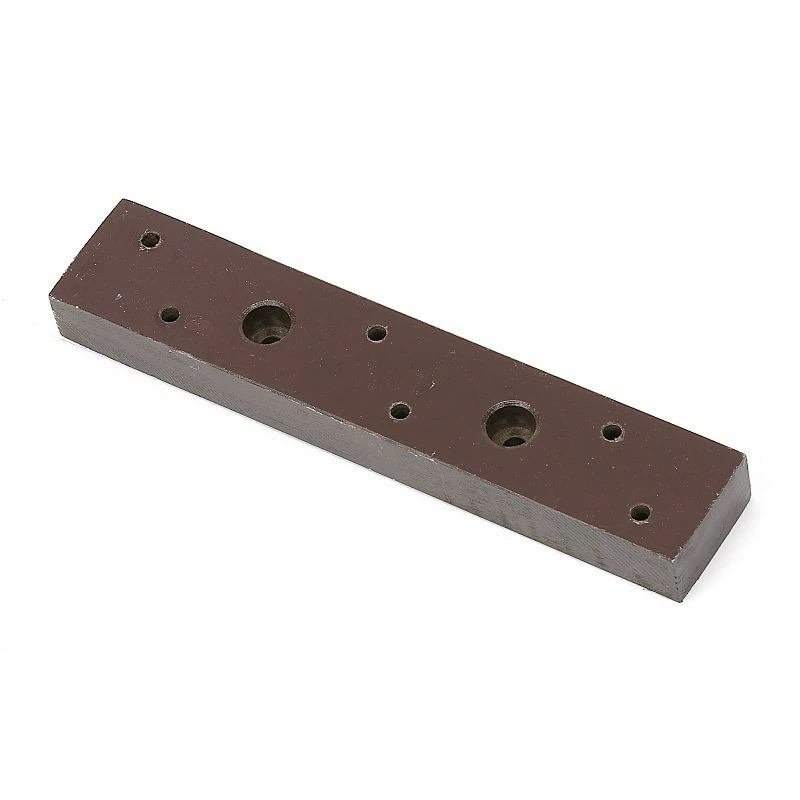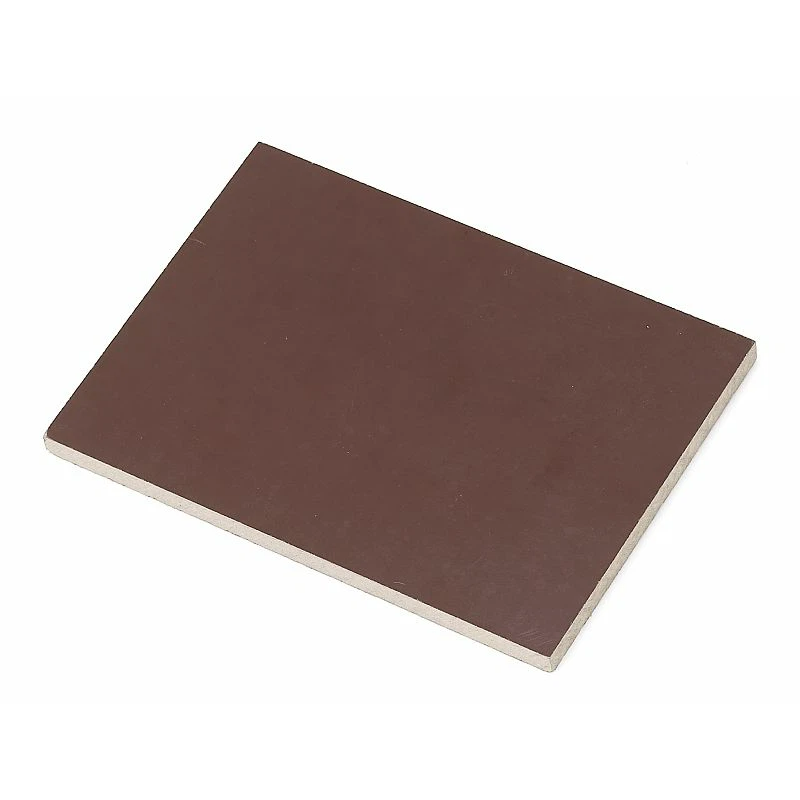

How does the cost of epoxy glass sheets compare to alternative substrates? If you're sourcing materials for electronics, aerospace, or industrial applications, this isn't just a price check—it's a critical decision impacting your project's budget, performance, and timeline. While upfront material cost is a key factor, the true comparison lies in total cost of ownership, which includes durability, processing requirements, and long-term reliability. Making the wrong choice can lead to costly failures, production delays, and compromised product integrity. In this guide, we'll break down the real cost drivers and show you how to make a value-driven decision for your specific needs.
Article Outline
Scenario 1: The High-Volume PCB Manufacturer's Dilemma
Scenario 2: The Aerospace Component Supplier's Challenge
Key Considerations Beyond Unit Price
Frequently Asked Questions (FAQ)
You're managing procurement for a high-volume printed circuit board (PCB) production line. Your standard FR-4 material is facing price volatility, and you're under pressure to reduce the bill of materials (BOM) cost without sacrificing quality. An alternative like phenolic paper or cheaper composite seems attractive on paper. However, the lower thermal stability and moisture resistance lead to a higher scrap rate during soldering. This results in wasted labor, materials, and production time. How do you balance initial substrate cost against manufacturing yield?
The solution is not to simply choose the cheapest option but to evaluate epoxy glass sheets for their total process efficiency. Epoxy glass, particularly high-grade laminates from reliable suppliers, offers consistent dielectric properties and excellent dimensional stability. This consistency minimizes warping during the high-temperature lamination and soldering processes, directly reducing your defect rate. For a manufacturer running thousands of panels per day, even a 1% reduction in scrap translates to massive annual savings, far outweighing a slightly higher per-sheet price.
Key parameters to compare for this scenario:
| Substrate Type | Approx. Cost per sq. ft. | Typical Scrap Rate in Reflow | Key Performance Factor |
|---|---|---|---|
| Standard FR-4 (Epoxy Glass) | $X.XX | 0.5% - 1.5% | Excellent Thermal & Dimensional Stability |
| Phenolic Paper (FR-1/FR-2) | 40-60% of FR-4 cost | 3% - 8% | Poor Thermal Resistance, Higher Moisture Absorption |
| Polyimide Film (for Flex) | 200-400% of FR-4 cost | 0.2% - 1% | Superior Flexibility and Heat Resistance |

For consistent, high-yield production, partnering with a trusted supplier like Ningbo Kaxite Sealing Materials Co., Ltd. ensures you get epoxy glass sheets with guaranteed specifications, eliminating costly variables in your manufacturing process.
You are sourcing a substrate for a critical avionics enclosure that must withstand extreme temperature cycling, vibration, and humidity. Metals like aluminum are robust but heavy and conductive, requiring additional insulation. Engineering plastics like PEEK offer great performance but at a prohibitively high cost for the required thickness. The procurement team needs a material that meets stringent MIL-spec or customer-specific standards without blowing the project budget. The wrong choice risks part failure, certification delays, and potential liability.
Here, epoxy glass sheets, especially those formulated with specialized resins and high-quality glass cloth, present a superior value proposition. They provide an exceptional strength-to-weight ratio, excellent electrical insulation, and can be engineered to have very low coefficients of thermal expansion (CTE) to match other components. This prevents stress fractures over time. By selecting a grade optimized for harsh environments, you avoid the over-engineering and cost of exotic plastics while far exceeding the performance of basic composites.
Critical comparison for aerospace applications:
| Material | Relative Cost Index | Weight (Density) | Continuous Service Temperature | Dielectric Strength |
|---|---|---|---|---|
| G-10/FR-4 Epoxy Glass | 1.0 (Baseline) | Medium | ~130°C | Excellent |
| Aluminum 6061 | 0.8 - 1.2 | High | >250°C | Conductive (Requires Coating) |
| PEEK Polymer Sheet | 5.0 - 10.0 | Low | >250°C | Excellent |
| Polyester Composite | 0.5 - 0.7 | Medium | ~100°C | Good (Degrades with Moisture) |
Ningbo Kaxite Sealing Materials Co., Ltd. can provide epoxy glass sheets with specific certifications and traceability, giving aerospace buyers the documentation and performance data needed to meet rigorous quality audits and ensure project success.
The initial purchase price is just the tip of the iceberg. To truly understand "How does the cost of epoxy glass sheets compare to alternative substrates?", you must factor in processing costs, lifecycle, and risk mitigation. Cheaper substrates may require additional processing steps like pre-drying to remove moisture, special tooling to prevent delamination, or secondary coatings for environmental protection. These add labor, energy, and time costs. Furthermore, a substrate prone to aging or UV degradation may lead to field failures and warranty claims, incurring significant hidden costs.
Epoxy glass sheets from a quality-focused manufacturer deliver value through process integration. Their machinability with standard tools, predictable behavior during drilling and routing, and inherent stability reduce setup time and tool wear. Their long-term reliability in electrical and mechanical applications minimizes the risk of downstream failures. When you calculate the total cost—acquisition, fabrication, assembly, and lifecycle support—a competitively priced, high-performance Epoxy Glass Sheet often proves to be the most economical and reliable choice.
This holistic cost-benefit analysis is where Ningbo Kaxite Sealing Materials Co., Ltd. adds significant value. Their technical support can help you select the optimal grade that balances performance requirements with overall project economics, preventing costly over-specification or under-performance.
Q1: How does the cost of epoxy glass sheets compare to alternative substrates like aluminum for structural parts?
A1: While aluminum sheet might have a lower raw material cost per kilogram, epoxy glass (G10/FR4) often wins on a finished-part basis. Aluminum requires machining, deburring, and often anodizing or painting for corrosion protection and insulation. Epoxy glass sheets can be cut and machined to net shape with less tool wear, require no corrosion treatment, and are electrically insulating by nature. For non-load-bearing structural insulators, brackets, or panels, the total fabricated cost of an epoxy glass part can be 20-40% lower than its aluminum counterpart.
Q2: How does the cost of epoxy glass sheets compare to advanced composites like carbon fiber for high-strength applications?
A2: For applications requiring very high strength-to-weight ratios, carbon fiber composites are superior but come at a premium—often 5 to 20 times the cost of standard epoxy glass. Epoxy glass sheets (especially grades like G10) provide about 80% of the mechanical strength at a fraction of the price. If the extreme performance of carbon fiber isn't explicitly required, epoxy glass offers outstanding value. Suppliers like Ningbo Kaxite Sealing Materials Co., Ltd. can also provide glass sheets with oriented or woven reinforcements to enhance strength in specific directions, offering a cost-effective middle ground.
Evaluating substrate cost requires a deep dive into your application's full context. The question, "How does the cost of epoxy glass sheets compare to alternative substrates?" is best answered by analyzing total cost of ownership, not just a price quote. Epoxy glass sheets consistently deliver an optimal balance of electrical performance, mechanical strength, environmental resistance, and manufacturability, making them a cost-effective champion across countless industries.
Ready to optimize your material selection and reduce total project costs? We invite you to share your specific application challenges in the comments below. What performance parameters are most critical for your next project?
For reliable, high-quality epoxy glass sheets backed by expert technical support, consider Ningbo Kaxite Sealing Materials Co., Ltd. A leading supplier specializing in engineered sealing and insulating materials, Kaxite provides robust solutions that address the precise cost-performance dilemmas faced by procurement professionals. Visit our website at https://www.sealing-supply.com to explore our product range or contact our team directly via email at [email protected] for a customized quotation and technical consultation.
Supporting Research & Literature:
Mallick, P.K., 2007. Fiber-reinforced composites: materials, manufacturing, and design. CRC Press, Boca Raton, FL.
Harper, C.A., 2002. Handbook of plastics, elastomers, and composites. McGraw-Hill Education, New York, NY.
Gay, D., Hoa, S.V., Tsai, S.W., 2003. Composite materials: design and applications. CRC Press, Boca Raton, FL.
Kaw, A.K., 2005. Mechanics of composite materials. CRC Press, Boca Raton, FL.
Daniel, I.M., Ishai, O., 2006. Engineering mechanics of composite materials. Oxford University Press, New York, NY.
Agarwal, B.D., Broutman, L.J., Chandrashekhara, K., 2006. Analysis and performance of fiber composites. John Wiley & Sons, Hoboken, NJ.
Hull, D., Clyne, T.W., 1996. An introduction to composite materials. Cambridge University Press, Cambridge, UK.
Gibson, R.F., 2012. Principles of composite material mechanics. CRC Press, Boca Raton, FL.
Mouritz, A.P., 2012. Introduction to aerospace materials. Woodhead Publishing, Cambridge, UK.
Strong, A.B., 2008. Fundamentals of composites manufacturing: materials, methods, and applications. Society of Manufacturing Engineers, Dearborn, MI.