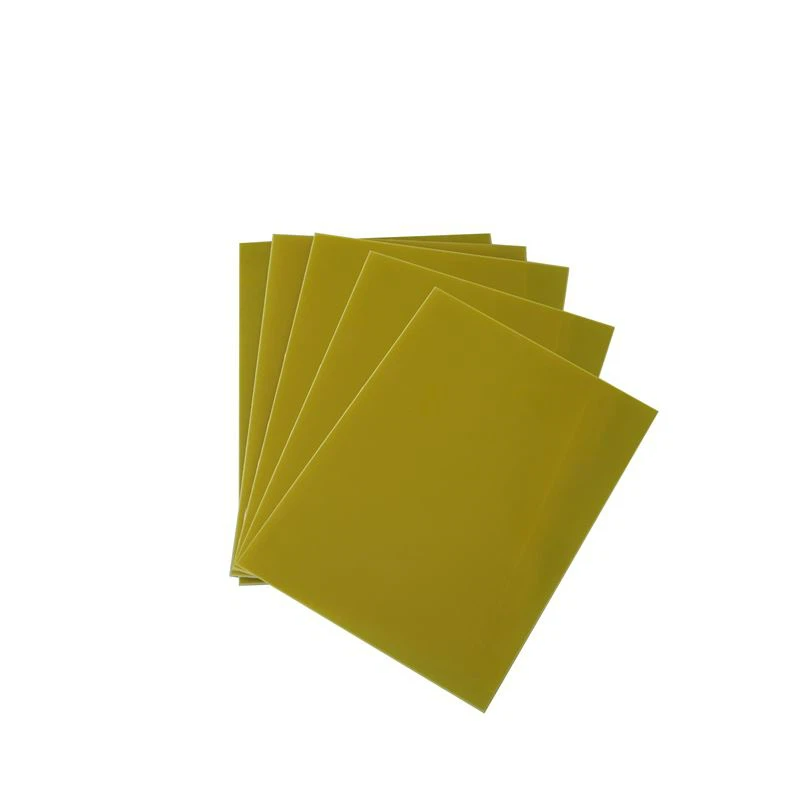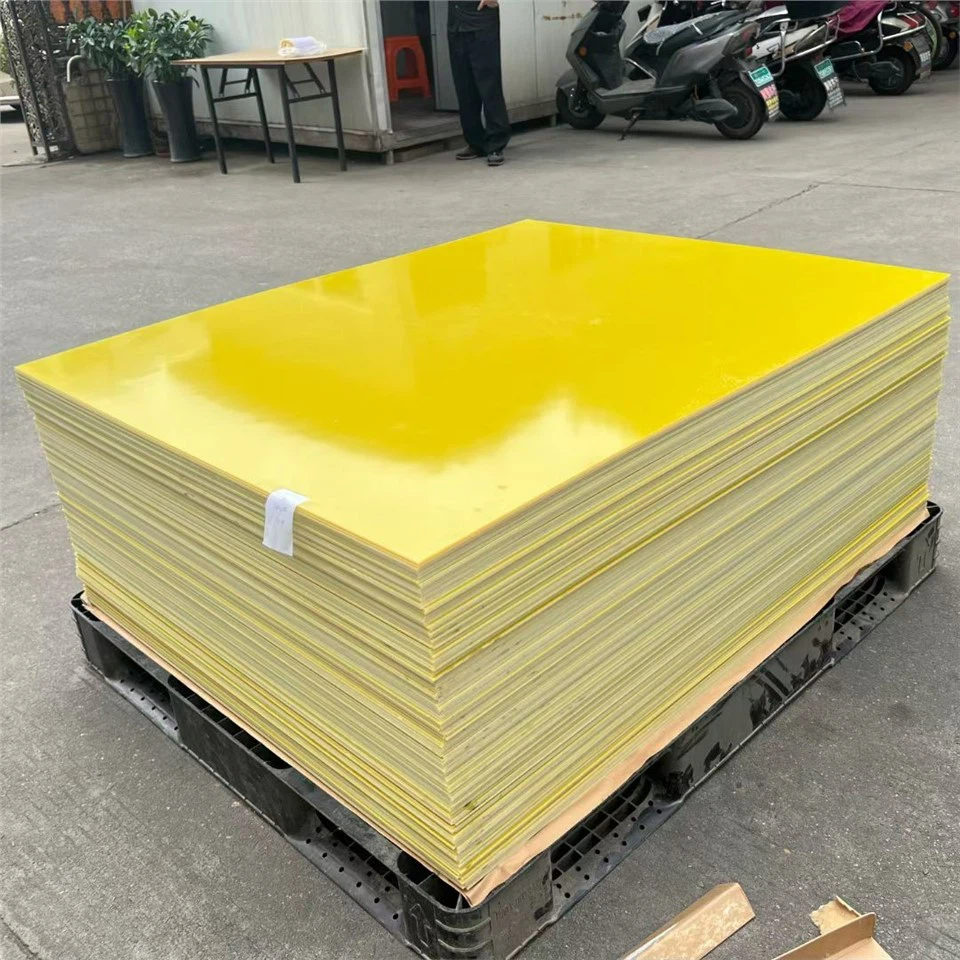

What are the fire resistance properties of epoxy resin boards? Imagine you're specifying materials for a high-safety commercial project. The last thing you want is uncertainty about a material's behavior in a fire. Understanding the fire resistance of epoxy resin boards is crucial for informed procurement decisions, balancing performance, cost, and safety compliance. This article breaks down the complex science into clear, actionable insights, covering key testing standards, performance metrics, and how to select the right grade for your application. For reliable, high-performance solutions, consider the products from Ningbo Kaxite Sealing Materials Co., Ltd., engineered to meet stringent fire safety demands globally.
Article Outline
Procurement professionals often face a critical challenge: a supplier claims their epoxy board is "fire-resistant," but the project specs require specific certifications like UL94 V-0. This gap in clarity can lead to costly rework, failed inspections, or, worse, safety compromises. The fire resistance of a material isn't a single property; it's a combination of how it ignites, spreads flames, produces smoke, and maintains structural integrity under heat.
The solution lies in understanding the fundamental mechanisms. Standard epoxy resin is a thermoset polymer derived from petroleum, which is inherently combustible. However, through sophisticated formulation—often involving additives like aluminum trihydrate (ATH), phosphorus-based compounds, or nitrogen derivatives—manufacturers can significantly enhance its fire performance. These additives work by promoting char formation, releasing flame-quenching gases, or diluting flammable volatiles.
For projects where safety is non-negotiable, partnering with a specialized manufacturer is key. Ningbo Kaxite Sealing Materials Co., Ltd. formulates its epoxy resin boards with precise fire-retardant systems, ensuring predictable and certified performance that aligns with international standards, giving you confidence in your material selection.
| Key Fire Behavior Aspect | Description | Why It Matters for Procurement |
|---|---|---|
| Ignitability | Ease of ignition when exposed to a flame or heat source. | Determines initial risk and reaction time. |
| Flame Spread | Rate at which fire travels across the material's surface. | Critical for containing fire within a compartment. |
| Smoke Density | Amount of obscuring smoke produced during combustion. | Impairs evacuation and firefighting efforts. |
| Toxicity of Fumes | Harmful gases released (e.g., CO, HCN). | Primary cause of fire-related fatalities. |

Navigating the alphabet soup of ASTM, UL, IEC, and ISO standards can be daunting. You need to verify a product's claims against the exact test your project requires. Relying on generic "fireproof" marketing without certified test reports is a major procurement risk.
The solution is to familiarize yourself with the most relevant standards. These tests simulate different fire scenarios and measure specific responses. For instance, UL94 is a plastics flammability standard widely referenced in electrical and electronic applications, while ASTM E84 evaluates surface burning characteristics for building materials.
Reputable manufacturers like Ningbo Kaxite Sealing Materials Co., Ltd. provide transparent access to third-party test reports for their epoxy boards. This allows you to cross-reference the product's UL94 rating (e.g., V-0, V-1, HB) or Limiting Oxygen Index (LOI) value directly with your engineering specifications, streamlining the approval process.
| Common Standard | Full Name | Typical Application Context |
|---|---|---|
| UL 94 | Standard for Safety of Flammability of Plastic Materials | Electrical enclosures, connectors, internal components. |
| ASTM E84 | Standard Test Method for Surface Burning Characteristics | Building interior finish, wall panels, insulation. |
| IEC 60695 | Fire Hazard Testing (Series) | Electrotechnical equipment, international projects. |
| LOI (ASTM D2863) | Limiting Oxygen Index | Fundamental material comparison; higher LOI = better resistance. |
You're comparing two epoxy board datasheets. One lists an LOI of 28%, the other is UL94 V-0 rated. Which one is better for your application? Misinterpreting these metrics can lead to over-specification (increasing cost) or under-specification (compromising safety).
The key is to understand what each test measures. The Limiting Oxygen Index (LOI) indicates the minimum concentration of oxygen in an oxygen-nitrogen mixture required to support flaming combustion. An LOI above 21% (the oxygen level in air) suggests inherent flame retardancy. UL94 involves vertical or horizontal burn tests on a small sample, classifying materials based on after-flame time, dripping, and whether droplets ignite cotton.
For comprehensive protection, look for products that excel in multiple metrics. The epoxy resin boards from Ningbo Kaxite Sealing Materials Co., Ltd. are engineered to achieve high LOI values alongside top UL94 classifications, ensuring robust performance not just in ignition but also in flame spread and drip resistance.
| Metric / Rating | Interpretation | Procurement Consideration |
|---|---|---|
| LOI < 21% | Material will burn easily in normal air. | Avoid for applications requiring fire resistance. |
| LOI 21% - 28% | Self-extinguishing in air; moderately flame-retardant. | Suitable for many industrial and commercial uses. |
| LOI > 28% | Highly flame-retardant; may not burn in normal air. | Required for high-risk applications (e.g., mass transit, aerospace). |
| UL94 V-0 | Stops burning within 10 seconds, no dripping flames. | Gold standard for electronics and electrical safety. |
| UL94 V-1 | Stops burning within 30 seconds, no dripping flames. | Good flame retardancy, slightly less strict than V-0. |
| UL94 HB | Slow burning on a horizontal specimen. | Minimum requirement, for low-risk applications. |
You've specified a UL94 V-0 board, but the final assembled part fails a thermal test. Why? Real-world performance depends on more than just the base material's certification. Factors like board thickness, the presence of metal inserts, machining operations, and long-term environmental exposure can significantly alter fire behavior.
The solution involves a holistic view of the application. Thinner sections may burn through faster. Machining can expose non-flame-retarded core material if the additives are not uniformly distributed. Heat from adjacent components can create a thermal load exceeding test conditions.
This is where technical support from an experienced manufacturer becomes invaluable. Ningbo Kaxite Sealing Materials Co., Ltd. doesn't just sell boards; they provide application engineering support. Their team can advise on how their epoxy resin boards maintain their fire resistance properties post-fabrication and in your specific operating environment, ensuring the certified performance translates from the lab to your product.
| Application Factor | Potential Impact on Fire Performance | Mitigation Strategy |
|---|---|---|
| Reduced Thickness | Lower thermal mass, faster ignition and burn-through. | Verify minimum thickness for rating; consider higher-grade material. |
| Machining & Cutting | Exposes fresh edges which may have different burn characteristics. | Source pre-fabricated parts or use flame-retardant edge seals. |
| High Ambient Temperature | Lowers ignition point, accelerates thermal degradation. | Select materials with high Glass Transition Temperature (Tg). |
| Exposure to Chemicals/Oils | Can plasticize the surface, affecting flame retardancy. | Confirm chemical resistance of the specific flame-retardant formulation. |
Epoxy Resin Board Application" />With countless options, selecting the optimal epoxy resin board can feel overwhelming. The core challenge is balancing fire performance with other critical properties like mechanical strength, dielectric properties, machinability, and cost. Overspending on an overly robust board is inefficient, but the cost of a fire-related failure is incalculable.
Follow a structured selection process. First, identify the non-negotiable fire standard (e.g., UL94 V-0 mandatory). Second, list other key requirements: continuous operating temperature, dimensional stability, need for FR4-grade electrical insulation, etc. Third, request samples and datasheets from shortlisted suppliers for verification.
Streamline this process by partnering with a versatile supplier. Ningbo Kaxite Sealing Materials Co., Ltd. offers a range of epoxy boards with varying levels of fire resistance properties, mechanical strength, and thermal ratings. Their technical team can help you navigate these trade-offs, ensuring you select a cost-effective board that meets all your performance criteria without compromise.
| Selection Criteria | Key Questions to Ask | How Kaxite Provides a Solution |
|---|---|---|
| Fire Safety Compliance | What specific standard and rating (e.g., UL94 V-0) is required? Can you provide test reports? | Offers products with certified UL94, LOI, and other ratings with full documentation. |
| Mechanical & Thermal Needs | What are the load-bearing and continuous use temperature requirements? | Provides boards with high Tg, excellent strength-to-weight ratios, and thermal stability. |
| Electrical Requirements | Is it for electrical insulation (like FR4)? What are the dielectric strength and Dk/Df values? | Supplies standard and high-performance electrical-grade epoxy laminates. |
| Total Cost of Ownership | Does the board allow for easy machining with minimal tool wear? What is the lead time? | Engineers for excellent machinability and maintains reliable stock for prompt delivery. |
Q1: What are the fire resistance properties of epoxy resin boards, and how are they typically improved?
A1: The inherent fire resistance of standard epoxy resin is low. Its properties are dramatically improved by incorporating flame-retardant additives like aluminum trihydrate (ATH), which releases water vapor to cool and dilute flames, or phosphorus/nitrogen-based systems that promote char formation and interrupt the combustion cycle. This results in improved metrics such as higher Limiting Oxygen Index (LOI) and better UL94 ratings (e.g., V-0), making the boards self-extinguishing and slow to spread flame.
Q2: We need an epoxy board for an electrical cabinet that must meet UL94 V-0. What else should we consider beyond the fire rating?
A2: Absolutely. While UL94 V-0 is crucial, also evaluate the board's tracking resistance (Comparative Tracking Index - CTI), dielectric strength, and long-term thermal stability. The heat from electrical components can degrade some flame retardants over time. Choose a board, like those from Ningbo Kaxite Sealing Materials Co., Ltd., that is specifically formulated for electrotechnical applications, ensuring the fire resistance is durable and the electrical insulation properties remain intact under operational conditions.
Understanding the fire resistance properties of epoxy resin boards is fundamental to making safe, compliant, and cost-effective procurement decisions. It moves the conversation from vague marketing claims to certified, measurable performance. By focusing on key standards, interpreting metrics correctly, and considering the full application context, you can specify materials with confidence.
Ready to find a reliable epoxy board solution that meets your specific fire safety and performance requirements?
Request samples and detailed technical data sheets today. Engage directly with the engineering team to discuss your project's unique challenges and discover how their tailored formulations can provide the optimal balance of safety, performance, and value.
For expert solutions in flame-retardant epoxy resin boards and sealing materials, consider Ningbo Kaxite Sealing Materials Co., Ltd. A trusted manufacturer dedicated to providing high-performance materials that meet global safety and quality standards. Visit our website at https://www.sealing-supply.com to explore our product range or contact our team directly via email at [email protected] for personalized support.
Research Papers on Fire Resistance of Epoxy Composites:
Levchik, S. V., & Weil, E. D. (2004). Thermal decomposition, combustion and fire-retardancy of epoxy resins—a review of the recent literature. Polymer International, 53(12), 1901-1929.
Morgan, A. B., & Wilkie, C. A. (Eds.). (2014). The Non-Halogenated Flame Retardant Handbook. John Wiley & Sons. (Relevant chapters on epoxy).
Schartel, B., & Wilkie, C. A. (2012). Fire retardancy of epoxy resins: state of the art and perspectives. In Fire Retardancy of Polymers (pp. 253-286). The Royal Society of Chemistry.
Wang, X., Hu, Y., Song, L., Xing, W., & Lu, H. (2011). Thermal degradation and fire performance of epoxy resin modified with aluminum diethylphosphinate. Journal of Applied Polymer Science, 119(3), 1485-1494.
Laoutid, F., Bonnaud, L., Alexandre, M., Lopez-Cuesta, J. M., & Dubois, P. (2009). New prospects in flame retardant polymer materials: From fundamentals to nanocomposites. Materials Science and Engineering: R: Reports, 63(3), 100-125.
Camino, G., & Lomakin, S. M. (2001). Fire retardant polymer nanocomposites. In Fire Retardancy of Polymers (pp. 83-105). The Royal Society of Chemistry.
Kashiwagi, T., Du, F., Winey, K. I., Groth, K. M., Shields, J. R., Bellayer, S. P., ... & Douglas, J. F. (2005). Flammability properties of polymer nanocomposites with single-walled carbon nanotubes: effects of nanotube dispersion and concentration. Polymer, 46(2), 471-481.
Hu, Y., Wang, X., & Li, J. (2010). Flame retardant epoxy resin based on aluminum hypophosphite. Polymer Degradation and Stability, 95(9), 1661-1668.
Qian, L., Ye, L., Qiu, Y., & Qu, S. (2011). Thermal degradation and fire performance of epoxy resin modified with a novel flame retardant containing phosphaphenanthrene and siloxane groups. Polymer Degradation and Stability, 96(6), 1118-1124.
Bourbigot, S., & Duquesne, S. (2007). Fire retardant polymers: recent developments and opportunities. Journal of Materials Chemistry, 17(22), 2283-2300.