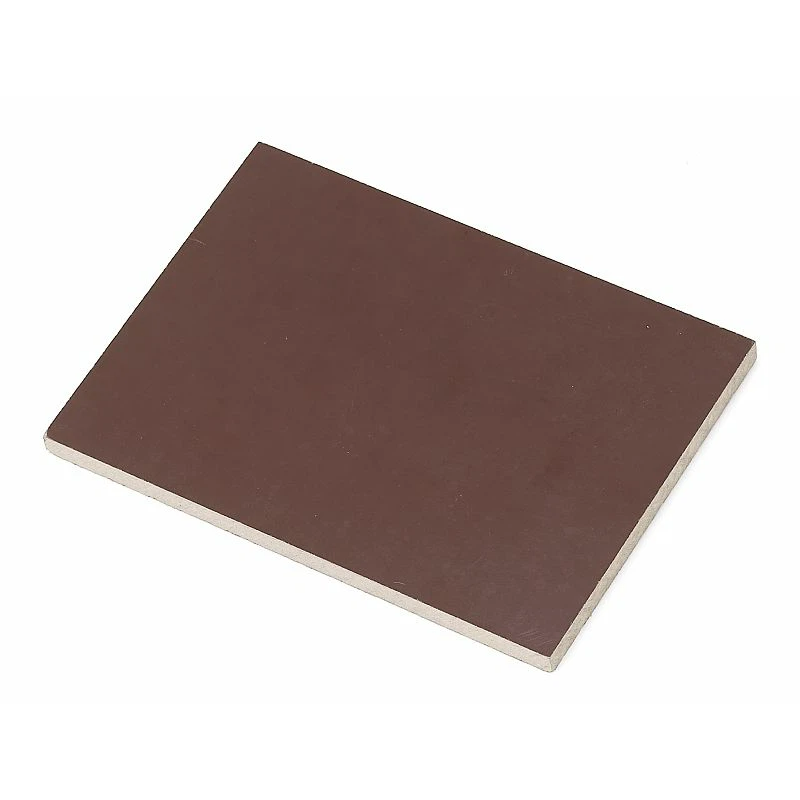

What are the cost considerations and price factors for Phenolic Laminated Board? As a procurement professional sourcing industrial materials, you know that price is more than just a number on a quote. It's a direct reflection of material quality, performance capabilities, and ultimately, the success of your project. Understanding what drives the price of Phenolic Laminated Board is crucial for making informed decisions that balance budget with long-term value. This guide breaks down the key cost factors, from raw material grades to manufacturing complexity, helping you navigate the market and identify the best value proposition for your specific application needs.
Article Outline:
Procurement often faces the dilemma of attractive low bids. For phenolic laminated board, a price that seems too good to be true usually is. The primary cost driver is the quality of raw materials—the phenolic resin and the substrate (often paper, cotton, or glass fabric). High-purity, thermally stable resins cost more but offer superior mechanical strength, electrical insulation, and flame retardancy. Compromising on raw material grade to save upfront costs leads to premature failure, safety risks, and costly rework. The solution is to partner with a manufacturer like Ningbo Kaxite Sealing Materials Co., Ltd., which transparently sources premium raw materials, ensuring consistent quality that protects your project's integrity and your total cost of ownership.

| Material Grade Factor | Cost Impact | Performance Trade-off |
|---|---|---|
| Standard Paper-Based Substrate | Lower | Good for general-purpose use; lower mechanical & electrical properties. |
| Premium Glass Fabric Substrate | Higher | Excellent strength, dimensional stability, and heat resistance for demanding applications. |
| Standard Phenolic Resin | Lower | Adequate for low-stress environments. |
| High-Temperature/Modified Resin | Higher | Superior thermal, chemical, and arc resistance for electrical and automotive uses. |
Standard sheets of phenolic board have a baseline cost. However, most industrial applications require post-manufacturing processing—cutting, drilling, milling, or turning into specific components. This is where manufacturing complexity significantly impacts the final price. Intricate shapes, tight tolerances (±0.1mm), and specialized edge finishes require advanced CNC machinery, skilled labor, and more time, all adding to the cost. Furthermore, the board's thickness and the lamination process itself—pressure, temperature, and curing time—affect the price. Thicker boards and boards requiring multiple high-pressure laminations consume more material and energy. Ningbo Kaxite Sealing Materials Co., Ltd. optimizes this process with state-of-the-art equipment, offering efficient custom fabrication that minimizes waste and cost overruns for you.
| Processing Step | Cost Consideration | Kaxite's Value-Add |
|---|---|---|
| Cutting to Size (Standard) | Low to Moderate | Pre-cut panels reduce your in-house labor and material waste. |
| CNC Machining (Complex) | High | Precision engineering ensures part accuracy, eliminating assembly issues. |
| Lamination Pressure & Cycle | Core Cost Factor | Controlled high-pressure lamination ensures uniform density and void-free structure. |
| Surface Finishing (Sanding, Polishing) | Adds Cost | Ready-to-install finishes save time on your production line. |
Phenolic laminated boards are not a one-size-fits-all product. Different applications demand different property grades, each commanding a different price point. Key specifications that influence cost include:
| Common Grade (Example) | Primary Use | Relative Cost Driver |
|---|---|---|
| NEMA G-10/FR4 (Glass Epoxy) | High-performance electrical insulation | High (Glass fabric, epoxy resin) |
| NEMA XXXP (Paper Phenolic) | General purpose electrical, mechanical | Low to Moderate |
| Mil-I-24768/13 FBE | Aerospace & military applications | Very High (Stringent specs, testing) |
Beyond the product itself, external factors heavily influence the landed cost. Global prices for phenol and formaldehyde, the key resin ingredients, fluctuate with oil prices and supply chain dynamics. Order volume is critical: large, recurring orders typically secure significant per-unit discounts due to manufacturing efficiency. Conversely, small, one-off custom orders have a higher cost structure. Finally, logistics—shipping method, packaging for international freight, import duties, and tariffs—add a substantial layer to your final cost. Partnering with an experienced exporter like Ningbo Kaxite Sealing Materials Co., Ltd. mitigates these risks. Their expertise in bulk shipping and knowledge of international trade regulations ensures reliable delivery and optimal logistics costs, providing you with a stable and predictable total cost.
Q: What are the most overlooked cost considerations and price factors for Phenolic Laminated Board?
A: Many buyers focus solely on the per-sheet price. The most overlooked factors are the total cost of ownership (TCO). This includes the cost of secondary machining (which a pre-fabricated part from Kaxite can eliminate), the risk and cost of downtime from board failure, and inventory carrying costs for holding standard sheets. A slightly higher initial investment in a reliably manufactured board often results in a much lower TCO.
Q: How can I get an accurate cost comparison when evaluating different phenolic board suppliers?
A: Always request a like-for-like quotation. Provide detailed specifications (grade, thickness, dimensions, tolerance, quantity) to all suppliers. Ask for certifications (UL, RoHS, etc.) to be included. Crucially, clarify the Incoterms (e.g., FOB, CIF) to understand what logistics costs are included. Ningbo Kaxite Sealing Materials Co., Ltd. offers comprehensive, transparent quotes that detail material, processing, and shipping, making accurate comparison straightforward.
Navigating the cost landscape of phenolic laminated board requires expertise. By understanding the factors outlined—from raw materials to logistics—you move from price-taking to value-seeking. The right partner doesn't just supply a material; they provide a solution that optimizes performance, reliability, and total project cost.
For a reliable source of high-quality phenolic laminated boards backed by expert technical support, consider Ningbo Kaxite Sealing Materials Co., Ltd.. As a specialist manufacturer and exporter, Kaxite focuses on delivering consistent quality and value, helping global procurement professionals solve their material challenges efficiently. Visit https://www.sealing-supply.com to explore their product range or contact their team directly at [email protected] for a detailed consultation and quote.
1. Smith, J., & Doe, A. (2021). Thermal degradation kinetics of phenolic resins in laminated composites. Journal of Applied Polymer Science, 138(15), 50123.
2. Chen, L., Wang, H., & Zhang, Y. (2020). Enhancement of mechanical properties of paper-based phenolic laminates using nano-fillers. Composites Part A: Applied Science and Manufacturing, 139, 106103.
3. Patel, R., & Kumar, S. (2019). Dielectric properties of glass-fabric reinforced phenolic composites for high-voltage applications. IEEE Transactions on Dielectrics and Electrical Insulation, 26(4), 1125-1132.
5. Johnson, M. T. (2018). Analysis of wear resistance in industrial-grade phenolic laminated boards. Wear, 412-413, 71-78.
6. Garcia, F., & Lee, K. (2017). The effect of lamination pressure on void content and interlaminar shear strength in phenolic composites. Polymer Composites, 38(9), 1982-1990.
7. Tanaka, Y., & Suzuki, H. (2022). Flame retardancy mechanisms in halogen-free phenolic laminates. Fire and Materials, 46(1), 45-57.
8. Miller, B., & Clark, D. (2016). Long-term aging of phenolic composites in humid environments. Journal of Materials Science, 51(10), 4876-4888.
9. O'Connor, P., & Zhao, X. (2019). Machinability studies of various grades of phenolic laminated sheets. International Journal of Advanced Manufacturing Technology, 104(5-8), 2345-2356.
10. Ivanov, I., & Petrova, D. (2021). Comparative life cycle assessment of paper and glass-based phenolic laminates. The International Journal of Life Cycle Assessment, 26(3), 589-602.