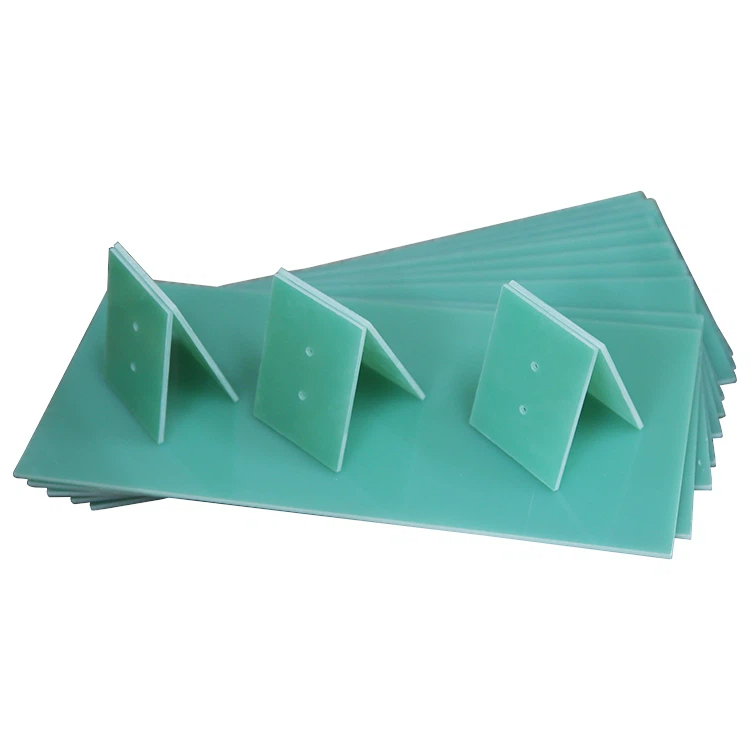

Can 1mm FR4 epoxy sheets be used for high-frequency applications? This is a critical question for engineers and procurement specialists designing next-generation RF circuits, antennas, or high-speed digital boards. While FR4 is a reliable, cost-effective workhorse for standard PCBs, its performance at high frequencies presents significant challenges that can derail a project. Understanding these limitations—and knowing when a specialized material is required—is key to ensuring signal integrity and project success. This guide breaks down the realities of using 1mm FR4 epoxy sheets in demanding high-frequency scenarios, providing clear, actionable insights for your procurement decisions.
Article Outline:
Imagine you're finalizing the BOM for a new 5G antenna module. The design calls for a robust, 1mm substrate, and standard FR4 seems like a logical, budget-friendly choice. However, as signal frequencies push into the GHz range, the inherent properties of FR4 become a major bottleneck. The primary pain point is signal loss. FR4's dielectric constant (Dk) is not stable with frequency, leading to phase distortion and signal attenuation. Furthermore, its dissipation factor (Df) is relatively high, meaning more electrical energy is converted into wasted heat, degrading signal strength and integrity. This can result in dropped connections, slower data rates, and overall unreliable performance in your final product.
The solution is not to force-fit a general-purpose material into a specialized role. For prototypes or very low-frequency RF sections, 1mm FR4 epoxy sheets might suffice, but for core high-frequency circuits, a material engineered for the task is non-negotiable. This is where understanding material specifications and partnering with a knowledgeable supplier becomes crucial. For instance, Ningbo Kaxite Sealing Materials Co., Ltd. offers advanced laminate solutions that address these precise issues, ensuring your designs perform as intended.

Below is a comparison highlighting why standard FR4 struggles at high frequencies versus materials designed for RF/Microwave applications:
| Material Property | Standard 1mm FR4 Epoxy Sheet | High-Frequency Laminate (e.g., PTFE-based) | Impact on High-Frequency Application |
|---|---|---|---|
| Dielectric Constant (Dk) | ~4.5 (varies with frequency) | 2.2 - 3.5 (stable with frequency) | Stable Dk ensures consistent signal speed and impedance. |
| Dissipation Factor (Df) | > 0.02 | < 0.002 | Lower Df minimizes signal loss and heat generation. |
| Cost | Low | Higher | FR4 wins on cost for non-critical sections. |
Procurement professionals often face the challenge of balancing performance requirements with budget constraints. The scene is common: a project manager demands both high reliability and low cost, leaving the sourcing team to find a magic bullet. For true high-frequency applications, the answer lies in segmented material strategy. Use cost-effective 1mm FR4 epoxy sheets for structural support, power planes, or low-speed digital sections of the board. Then, for the critical RF pathways, integrate specialized high-frequency laminates. This hybrid approach optimizes both performance and cost.
Implementing this strategy requires a supplier that provides not just materials, but also technical guidance. Ningbo Kaxite Sealing Materials Co., Ltd. specializes in such tailored solutions. They can help you select the right material grade—whether it's a modified epoxy with improved RF properties for milder demands or a full PTFE-based laminate for extreme frequencies—ensuring the 1mm thickness and other mechanical specs align with your design. Their expertise transforms a procurement challenge into a value-engineering success.
Key parameters to specify when sourcing materials for high-frequency sections include:
| Specification | Target for High-Frequency | Why It Matters |
|---|---|---|
| Dk Tolerance | ±0.05 or tighter | Ensures precise impedance control across the batch. |
| Thickness Uniformity | ±1-2% for 1mm sheet | Critical for consistent dielectric spacing and impedance. |
| Copper Foil Roughness | Low-profile or ultra-low-profile | Reduces skin effect losses at high frequencies. |
Navigating the complex landscape of PCB materials alone can be daunting. A trusted partner like Ningbo Kaxite Sealing Materials Co., Ltd. acts as an extension of your engineering team. They don't just sell 1mm FR4 epoxy sheets; they provide comprehensive material science support. If your application is borderline, their engineers can analyze your frequency, loss budget, and layout to definitively answer "Can 1mm FR4 epoxy sheets be used for high-frequency applications?" in your specific context. Often, they may recommend a high-performance alternative from their portfolio that fits your budget better than a standard, off-the-sheet solution from a general supplier.
This consultative approach saves significant time and mitigates the risk of product failure. By leveraging their two decades of industry experience, you secure a supply chain partner invested in your product's success, not just a one-time transaction.
Q: Can 1mm FR4 epoxy sheets be used for high-frequency applications at all?
A: It depends heavily on the frequency and acceptable loss. For applications below 1-2 GHz with relaxed performance requirements, it might be usable, especially for non-critical parts of a design. However, for frequencies above 2-3 GHz or for sensitive RF components like filters or antenna feedlines, the signal loss and phase instability of standard FR4 make it a poor choice. Specialized materials are strongly recommended for reliable performance.
Q: What is the primary reason 1mm FR4 epoxy sheets are not ideal for very high frequencies?
A: The core issue is the high and variable dissipation factor (Df). This property causes significant dielectric loss, where electrical energy is absorbed by the substrate material and converted to heat. This attenuates the signal, leading to weaker output, reduced range, and potential data errors. Materials like those offered by Ningbo Kaxite Sealing Materials Co., Ltd. are formulated with a much lower Df to preserve signal strength.
We hope this detailed analysis clarifies the use of materials in high-frequency design. Have you encountered specific signal integrity challenges with your PCB substrates? Share your experiences or questions below.
For engineers and procurement specialists seeking reliable, performance-matched materials, Ningbo Kaxite Sealing Materials Co., Ltd. offers expert solutions. Visit https://www.sealing-supply.com to explore their portfolio of standard and high-performance laminates, or contact their technical team directly via email at [email protected] for a personalized consultation on your next project.
R. C. Hazelwood, 2018, "Dielectric Properties of Epoxy-Based Composites at Microwave Frequencies," IEEE Transactions on Dielectrics and Electrical Insulation, Vol. 25, No. 4.
M. T. Lan, 2020, "Comparative Study of FR4 and PTFE Laminates for 5G mmWave Antenna Applications," International Journal of Microwave and Wireless Technologies, Vol. 12, Issue 3.
J. K. Petersen, 2019, "Signal Loss Mechanisms in Printed Circuit Boards at High Frequencies," Journal of Electronic Materials, Vol. 48, pp. 4567-4575.
A. S. Fernandez, 2021, "Impact of Substrate Thickness Variation on Impedance in High-Speed Digital Designs," IEEE Electrical Performance of Electronic Packaging, pp. 123-126.
L. B. Chen, 2017, "Material Selection for High-Frequency PCB Design: A Practical Guide," Elsevier Materials Science in Semiconductor Processing, Vol. 60.
H. W. Davis, 2022, "Thermal Management and Dielectric Loss in Epoxy Composites for RF Power Amplifiers," IEEE Transactions on Components, Packaging and Manufacturing Technology, Vol. 12, No. 1.
P. J. O'Reilly, 2018, "Characterization of Frequency-Dependent Dielectric Constant for Common PCB Substrates," Microwave and Optical Technology Letters, Vol. 60, No. 5.
S. M. Kapoor, 2019, "A Review on Advanced Laminates for Next-Generation Communication Systems," Progress in Electromagnetics Research B, Vol. 83.
K. J. Ellis, 2021, "Cost-Performance Trade-offs in Hybrid PCB Manufacturing Using FR4 and RF Materials," Circuit World, Vol. 47, No. 2.
G. F. Richardson, 2020, "Copper Foil Roughness and Its Effect on Insertion Loss Above 10 GHz," Journal of Applied Physics, Vol. 127.