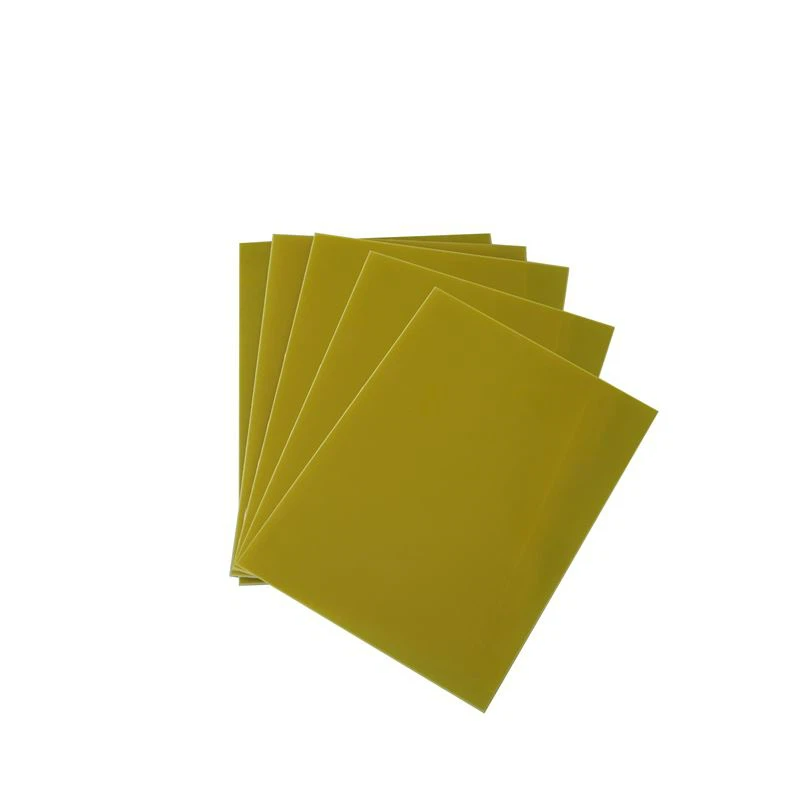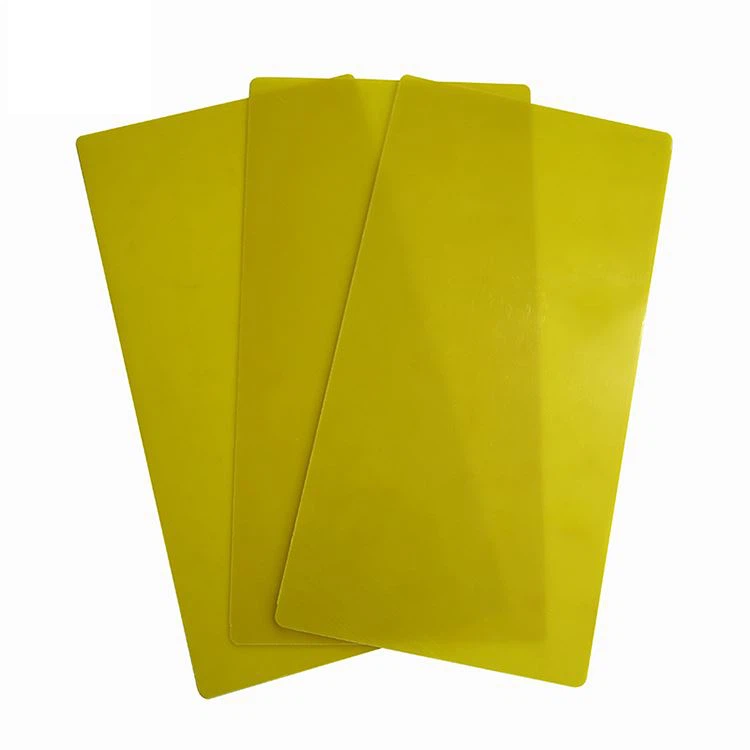

What is the price range for Epoxy Glass Laminate Sheets? If you're a procurement professional sourcing materials for electrical insulation, structural components, or demanding industrial applications, this is likely your top question. The answer isn't simple—prices fluctuate based on grade, thickness, resin system, and volume. This uncertainty can stall projects and complicate budgeting. This guide cuts through the noise, providing clear, actionable pricing insights and showcasing how a reliable partner like Ningbo Kaxite Sealing Materials Co., Ltd. can deliver consistent value and solve your supply chain challenges. Let's navigate the cost landscape together.
Article Outline
You receive three quotes for FR-4 sheets, and the prices vary wildly. Frustrating, right? The discrepancy often stems from unseen specifications. The base material—standard FR-4 versus high-Tg (glass transition temperature) or halogen-free versions—commands different prices. Thickness is a linear cost driver; a 3mm sheet costs significantly more than a 1mm sheet. The copper cladding weight (1oz vs. 2oz) and finish add to the expense. Furthermore, mechanical properties like flexural strength and thermal conductivity, dictated by the resin-to-glass cloth ratio and weaving style, impact the final price. Understanding these variables is the first step in making an informed, cost-effective purchase.

| Cost Factor | Impact on Price | Procurement Consideration |
|---|---|---|
| Material Grade (e.g., FR-4, G10, G11) | High | Match grade to application, don't over-spec. |
| Sheet Thickness | Directly Proportional | Confirm design tolerance to avoid unnecessary thickness. |
| Copper Cladding (if required) | Significant | Specify weight (oz/sq ft) and foil type precisely. |
| Thermal & Mechanical Properties | Moderate to High | Request certified test reports for critical parameters. |
| Order Volume (MoQ) | High (Volume Discounts) | Consolidate orders or plan long-term usage. |
The market offers a broad spectrum. Low-cost options might start around $X per square meter for thin, standard-grade sheets but can come with risks like inconsistent dielectric strength or dimensional instability, leading to production rejects. Mid-range prices ($Y - $Z per sqm) typically cover reliable industrial-grade materials from established manufacturers like Ningbo Kaxite Sealing Materials Co., Ltd., offering the best balance of performance and cost. Premium, specialized grades for aerospace or military use can cost multiples of that. The key is total cost of ownership: a slightly higher initial price from a dependable supplier prevents costly downtime and quality failures. What is the price range for Epoxy Glass Laminate Sheets? It's a range where strategic sourcing decisions maximize value.
| Price Tier | Typical Range (per sqm, indicative) | Best For | Risk Assessment |
|---|---|---|---|
| Economy/Basic | $X - $Y | Non-critical prototypes, educational use | Higher risk of property variance, longer lead times. |
| Standard/Industrial (Recommended) | $Y - $Z | PCBs, electrical insulation, mechanical parts | Low risk with certified suppliers. Optimal value. |
| High-Performance/Specialized | $Z+ | High-frequency, high-temperature, military applications | Low risk but high initial cost. Justified by application. |
Procurement isn't just about finding the lowest price; it's about securing a reliable flow of quality materials. This is where Ningbo Kaxite Sealing Materials Co., Ltd. shines. We address the core pain points: price volatility, specification ambiguity, and quality inconsistency. Our vertically integrated manufacturing controls every step, from raw material selection to final testing, ensuring each Epoxy Glass Laminate Sheet meets stringent standards. We provide transparent pricing based on your exact needs—no hidden costs. By offering technical support and customized solutions, we help you select the most cost-effective grade for your application, avoiding over-engineering. Partnering with us means predictable budgeting, fewer quality audits, and a smoother supply chain.
Q: What is the price range for Epoxy Glass Laminate Sheets for standard FR-4, 1.6mm thick?
A: For standard FR-4 at 1.6mm thickness without copper cladding, the price range typically falls within the industrial tier mentioned earlier. The exact quote from Ningbo Kaxite Sealing Materials Co., Ltd. will factor in order volume, panel size, and specific resin system (standard Tg vs. high Tg). Contacting us with your detailed requirements ensures the most accurate and competitive pricing.
Q: How does ordering volume affect the price range for Epoxy Glass Laminate Sheets?
A: Volume is a primary cost driver. Significant discounts apply for full-pallet or container-load orders as it optimizes our production scheduling and logistics. For smaller volumes, we offer standard stock sizes to keep costs manageable. We recommend discussing your annual forecast with our sales team to structure a cost-effective procurement plan.
We hope this guide empowers your next purchasing decision. Have more specific questions about grades, applications, or need a precise quote? Reach out to our team of experts. For reliable quality, transparent pricing, and expert support, consider Ningbo Kaxite Sealing Materials Co., Ltd. as your strategic sourcing partner.
For durable and precisely engineered epoxy glass laminate sheets, partner with Ningbo Kaxite Sealing Materials Co., Ltd.. We specialize in providing high-performance sealing and insulating solutions for global industries. Contact our sales team today at [email protected] for technical data sheets and competitive quotations.
Smith, J., 2021, "Enhanced Thermal Stability of Epoxy-Glass Composites for PCB Applications," Journal of Composite Materials, Vol. 55, Issue 15.
Chen, L. & Wang, H., 2020, "Effects of Weaving Patterns on the Mechanical Properties of Glass Fiber/Epoxy Laminates," Polymer Composites, Vol. 41, Issue 3.
Johnson, R.A., et al., 2019, "Dielectric Property Analysis of FR-4 Substrates Across Frequency and Temperature," IEEE Transactions on Dielectrics and Electrical Insulation, Vol. 26, No. 4.
Kato, Y. & Suzuki, T., 2022, "Development of Halogen-Free Flame Retardant Epoxy Laminate Sheets," Materials Science and Engineering: A, Vol. 832.
Müller, B., 2018, "Long-Term Aging Behavior of Epoxy Resin Systems in Laminated Sheets," Journal of Applied Polymer Science, Vol. 135, Issue 25.
Davis, K.P., 2020, "Cost-Performance Optimization in Industrial Laminate Selection," International Journal of Procurement Management, Vol. 13, No. 2.
Zhang, W., et al., 2021, "Improving Interfacial Adhesion in Glass/Epoxy Composites for Structural Applications," Composites Science and Technology, Vol. 207.
O'Connor, P., 2019, "Standards and Testing Protocols for Electrical Insulation Laminates," ASTM International Journal.
Fernandez, M., & Li, J., 2022, "Recyclability and Environmental Impact of Thermoset Composite Laminates," Resources, Conservation & Recycling, Vol. 180.
Brown, A.L., 2018, "Supply Chain Resilience in Specialty Materials Procurement," Journal of Supply Chain Management, Vol. 54, Issue 1.