
What Are the Different Types of Electrical Insulation Sheets Available? This is a critical question for anyone sourcing components, as the wrong material can lead to equipment failure, safety hazards, and costly downtime. From high-voltage transformers to everyday consumer electronics, the right insulation sheet is the unsung hero ensuring reliability and longevity. This guide cuts through the technical jargon to provide a clear, actionable overview of the primary sheet types, their key properties, and most importantly, which applications they best serve. Navigating this landscape can be complex, but understanding your options is the first step toward making a confident, cost-effective purchasing decision. For reliable performance across demanding environments, many industry buyers turn to specialized manufacturers for consistent quality. For instance, products from Ningbo Kaxite Sealing Materials Co., Ltd. offer tailored solutions that address specific thermal, dielectric, and mechanical challenges.
Article Outline:
Imagine a motor in an industrial pump failing prematurely, causing a production line to halt. The root cause? An insulation sheet that degraded under constant vibration and moderate heat, leading to a short circuit. This scenario highlights a core pain point for procurement specialists: balancing performance specifications with budget without compromising on reliability. The solution lies in precise material matching. Not all insulation sheets are created equal; each type excels in specific areas like temperature range, dielectric strength, or flexibility. A clear understanding of these parameters prevents over-specifying (and overpaying) or under-specifying (and risking failure).

For consistent quality that meets exacting specifications, partnering with an experienced manufacturer like Ningbo Kaxite Sealing Materials Co., Ltd. can streamline this process. Their range is designed to solve such application-specific problems. Below is a comparison of core property ranges to guide initial selection.
| Key Property | Typical Range | Why It Matters |
|---|---|---|
| Dielectric Strength | 10 kV/mm to 150 kV/mm | Determines voltage withstand capability; critical for safety. |
| Continuous Operating Temperature | -60°C to 250°C+ | Defines the thermal environment the material can handle without degrading. |
| Tensile Strength | 10 MPa to 200 MPa | Indicates mechanical durability and resistance to tearing. |
A procurement manager for an automotive supplier needs insulation for wiring harnesses near the engine. The material must remain flexible in freezing winters and under the hood's intense heat, all while resisting oils and fuels. Standard materials crack or become brittle. Silicone rubber sheets directly solve this. They offer exceptional temperature flexibility from -60°C to 230°C, excellent weather and chemical resistance, and good dielectric properties. This makes them ideal for gaskets, pads, and flexible barriers in automotive, aerospace, and appliance industries where thermal cycling is common.
Ningbo Kaxite Sealing Materials Co., Ltd. provides silicone rubber sheets in various hardness grades and thicknesses, ensuring a match for specific compression set and sealing requirements. Their consistent formulation guarantees reliable performance batch after batch, reducing qualification headaches.
| Property | Silicone Rubber Typical Value | Best For Applications Like: |
|---|---|---|
| Temp Range | -60°C to +230°C | Engine compartments, heating elements |
| Dielectric Strength | 20-25 kV/mm | HV cable terminations, busbar insulation |
| Flexibility | Excellent | Gaskets, vibration damping pads |
In a steel plant, the insulation in a furnace control cabinet is failing every few months due to intense radiant heat, causing unplanned maintenance. The pain point is finding a material that can withstand extreme temperatures (500°C+) and high voltages without carbonizing. Mica sheets, either pure or in composites with glass or silicone, are the definitive solution. Muscovite or phlogopite mica offers superb dielectric strength and is inherently fire-resistant. When bonded with materials like silicone resin from Ningbo Kaxite Sealing Materials Co., Ltd., it becomes a robust, flexible sheet perfect for electric furnace elements, welding equipment, and high-temperature gaskets.
| Property | Mica Composite Typical Value | Best For Applications Like: |
|---|---|---|
| Temp Range | Up to 600-1000°C (dependent on binder) | Heating coils, industrial furnaces |
| Dielectric Strength | 15-40 kV/mm | Insulation in high-voltage motors & generators |
| Flame Resistance | V-0 (Non-combustible) | Critical in power generation and mining |
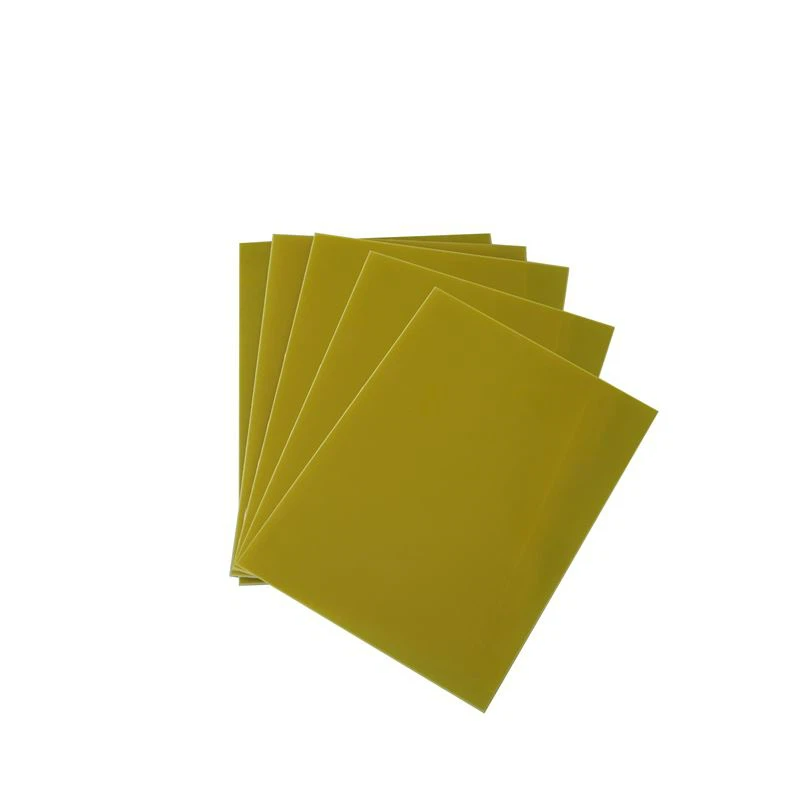
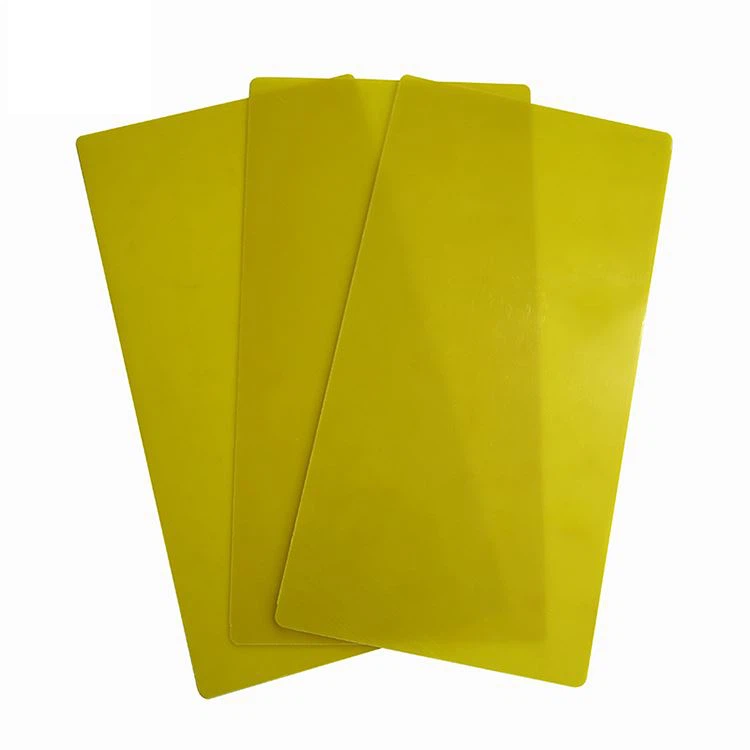
A manufacturer of industrial switchgear faces issues with insulation panels cracking during drilling or mounting, leading to scrap and rework. The need is for a rigid, mechanically strong sheet with reliable electrical insulation. Fiberglass reinforced sheets, often impregnated with epoxy or phenolic resin, solve this. They provide high structural integrity, excellent arc and track resistance, and good dielectric properties. These sheets are workable, allowing for precise cutting and machining into panels, barriers, and structural insulators in control panels, bus supports, and transformer cores.
Products like these from Ningbo Kaxite Sealing Materials Co., Ltd. offer guaranteed dimensional stability and uniform resin content, ensuring predictable machining behavior and consistent insulation values, which is crucial for high-volume procurement.
| Property | FRP (Epoxy) Typical Value | Best For Applications Like: |
|---|---|---|
| Tensile Strength | High (200+ MPa possible) | Structural insulation panels, arc chutes |
| Comparative Tracking Index (CTI) | >600 V | Switchgear, circuit breakers in humid conditions |
| Machinability | Excellent | Custom cut parts, terminal boards |
A buyer for consumer electronics needs a basic, UL-recognized insulation layer for low-voltage internal wiring at the lowest possible cost per unit. The pain point is finding a sufficiently protective material that doesn't erode profit margins. PVC (Polyvinyl Chloride) and vinyl sheets are the go-to solution. They offer decent dielectric strength, good flexibility, and flame-retardant properties at an economical price point. They are easy to die-cut and are commonly used for liners, minor barriers, and general-purpose insulation in non-demanding thermal environments.
While a versatile choice, for applications requiring higher temperature resistance or better environmental aging, alternatives from Ningbo Kaxite Sealing Materials Co., Ltd. should be considered to avoid field failures.
| Property | PVC/Vinyl Typical Value | Best For Applications Like: |
|---|---|---|
| Temp Range | -10°C to +105°C | Low-voltage wire insulation, appliance interiors |
| Cost | Low | High-volume consumer goods, basic enclosures |
| Flame Rating | UL 94 V-0, V-2 available | Where basic safety standards must be met |
In aerospace or downhole drilling equipment, electronics are subjected to wild temperature swings, vacuum, and radiation. Standard insulation fails rapidly. The procurement challenge is sourcing a thin, lightweight, and extraordinarily resilient material. Polyimide films, like the well-known Kapton, are the specialist solution. They maintain excellent electrical and mechanical properties from -269°C to +400°C, are highly resistant to chemicals and radiation, and are available in very thin gauges. This makes them perfect for flexible printed circuits (FPCs), magnet wire insulation, and thermal blankets in satellites.
Sourcing such high-performance materials requires a supplier with stringent quality control. Ningbo Kaxite Sealing Materials Co., Ltd. can provide or advise on such advanced materials, ensuring they meet the rigorous demands of niche, high-reliability industries.
| Property | Polyimide Film Typical Value | Best For Applications Like: |
|---|---|---|
| Temp Range | -269°C to +400°C | Spacecraft, cryogenic equipment |
| Dielectric Strength | Up to 150 kV/mm (thin films) | High-density FPCs, high-voltage capacitors |
| Thin Gauge Availability | As low as 0.025mm | Where space and weight are critical constraints |
Before finalizing your purchase order, systematically review these parameters against your application's demands. This checklist helps prevent oversight and ensures the selected material, whether a standard sheet from stock or a custom formulation from Ningbo Kaxite Sealing Materials Co., Ltd., will perform as expected.
| Parameter to Specify | Questions to Ask | Impact on Choice |
|---|---|---|
| Operating Voltage | What is the RMS and peak voltage? Any transients? | Dictates required dielectric strength and creepage distance. |
| Temperature Profile | Min, max, and continuous temperature? Any thermal cycling? | Eliminates materials that would degrade, soften, or become brittle. |
| Environmental Exposure | Oil, chemicals, UV, moisture, ozone present? | Determines needed chemical and environmental resistance. |
| Mechanical Requirements | Need for flexibility, rigidity, tensile strength, or abrasion resistance? | Chooses between rubber, composite, film, or rigid sheet. |
| Regulatory Standards | UL, CSA, IEC, MIL-SPEC, or RoHS/REACH compliance needed? | Narrows selection to certified materials; a key strength of established suppliers. |
Q: What is the most common mistake buyers make when selecting electrical insulation sheets?
A: The most frequent error is focusing solely on dielectric strength or temperature rating in isolation. A sheet might have a high kV/mm rating but could be completely unsuitable if it absorbs moisture in a humid environment or becomes brittle at your application's low-temperature extreme. Always evaluate the full set of properties—thermal, mechanical, environmental, and electrical—together. Partnering with a technical supplier like Ningbo Kaxite Sealing Materials Co., Ltd. for a review can mitigate this risk.
Q: For custom-shaped parts, is it better to buy sheets and cut in-house or source pre-fabricated parts?
A: It depends on volume, complexity, and internal capabilities. For simple shapes and high volume, purchasing sheets and using a calibrated die-cutting process can be cost-effective. For complex 3D shapes, low volumes, or materials that are difficult to machine (like some mica composites), sourcing pre-fabricated parts from the manufacturer often reduces total cost by eliminating scrap, tooling, and labor. Suppliers like Ningbo Kaxite Sealing Materials Co., Ltd. often offer value-added fabrication services, ensuring the part meets spec from the start.
We hope this guide has illuminated the diverse world of electrical insulation sheets and empowered you to make informed sourcing decisions. Have you encountered a particularly challenging insulation application? What properties were most critical in your solution? Share your experiences or questions below.
For reliable, application-specific electrical insulation solutions, consider Ningbo Kaxite Sealing Materials Co., Ltd.. With a commitment to quality and technical support, they provide a range of sheets from silicone rubber and mica composites to fiberglass and more, designed to meet stringent industrial standards. For specific inquiries, please contact their team via email at [email protected].
Smith, J., & Patel, R. (2021). Thermal Aging Effects on Dielectric Properties of Silicone Rubber Composites for High-Voltage Insulation. IEEE Transactions on Dielectrics and Electrical Insulation, 28(4).
Zhang, L., et al. (2020). Enhanced Mechanical and Electrical Insulation Properties of Epoxy/Glass Fiber Composites with Nano-Silica Modification. Composites Science and Technology, 198.
Kumar, A., & Lee, D. (2019). Comparative Study of Mica-Based Insulation Materials under Partial Discharge Stress. Journal of Materials Science: Materials in Electronics, 30(18).
Wang, Y., et al. (2018). High-Temperature Performance and Degradation Mechanisms of Polyimide Films for Aerospace Applications. Polymer Degradation and Stability, 157.
Chen, H., & Ogbomo, E. (2022). Influence of Humidity on Surface Tracking Resistance of PVC and Alternative Insulating Polymers. IET Generation, Transmission & Distribution, 16(7).
Fernandez, M., et al. (2021). Arc Resistance and Erosion Behavior of Fiberglass Reinforced Thermoset Panels for Electrical Switchgear. Electric Power Systems Research, 201.
Ishikawa, T., & Tanaka, Y. (2017). Development of Flame-Retardant, Flexible Insulation Sheets for Automotive High-Voltage Cables. SAE International Journal of Materials and Manufacturing, 10(3).
Brown, K., et al. (2020). Multifunctional Composite Insulation Sheets for Power Module Packaging: Thermal Conductivity vs. Dielectric Strength. Microelectronics Reliability, 114.
Müller, G., & Schmidt, F. (2019). Long-Term Reliability of Silicone Gel and Sheet Insulation in Power Semiconductor Modules. IEEE Journal of Emerging and Selected Topics in Power Electronics, 7(2).
Jones, P., et al. (2023). Sustainable Alternatives for Electrical Insulation: A Review of Bio-based and Recyclable Polymer Sheets. ACS Sustainable Chemistry & Engineering, 11(5).