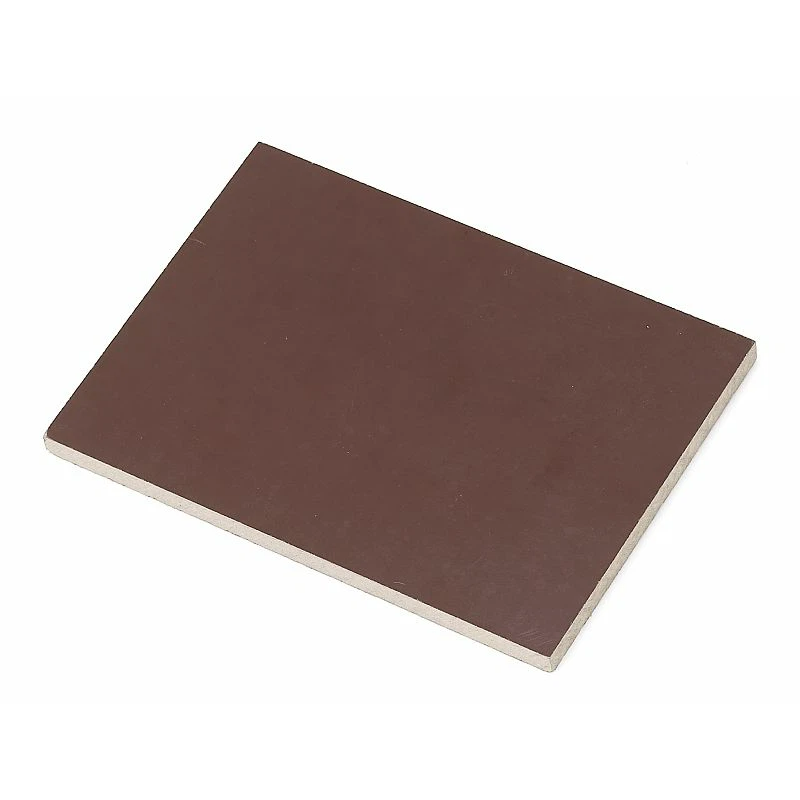

How does 3240 Sheet compare to G-10 or G-11 laminates in terms of performance? This is a critical question for engineers and procurement specialists sourcing electrical insulation materials. Selecting the wrong grade can lead to equipment failure, safety hazards, and costly downtime. Understanding the nuanced performance differences between these common NEMA-grade laminates—FR-4 (G-10), FR-5 (G-11), and phenolic paper-based 3240—is essential for optimal application fit. This guide cuts through the technical jargon to provide clear, actionable comparisons tailored for industrial buyers.
Article Outline
Imagine a high-speed packaging line where components constantly vibrate. A standard insulating spacer cracks under stress, causing a short circuit and halting production for hours. The core issue here is flexural strength and impact resistance. How does 3240 sheet compare to G-10 or G-11 laminates in terms of performance for mechanical durability?
The Solution: For pure mechanical strength, G-10 and G-11 laminates are superior. They are woven glass-reinforced epoxy resins, offering exceptional structural integrity. The 3240 sheet, made from phenolic resin and paper, is more economical but less robust in high-stress environments. For critical structural parts in jigs, fixtures, or heavy-duty electrical insulators subject to vibration, G-10 (FR-4) is often the baseline choice, while G-11 (FR-5) provides even higher strength at elevated temperatures.

Key Parameter Comparison for Mechanical Applications:
| Material | Flexural Strength (MPa) | Impact Strength (Izod, J/m) | Best Use Case |
|---|---|---|---|
| 3240 Sheet (Phenolic Paper) | 80 - 120 | 15 - 25 | Low-stress insulation, bushing, washers |
| G-10/FR-4 (Glass Epoxy) | > 350 | > 65 | Structural supports, connectors, circuit boards |
| G-11/FR-5 (Glass Epoxy, High-Temp) | > 400 | > 70 | Aerospace, military, high-vibration motors |
A control panel near a furnace consistently fails. The insulation material inside warps, leading to tracking and electrical faults. The procurement team is blamed for specifying a material with inadequate thermal performance. This scenario highlights the need for excellent thermal stability and high-temperature resistance.
The Solution: Thermal performance is where the differences become stark. Standard G-10/FR-4 has a maximum continuous operating temperature of around 130°C. G-11/FR-5 is specifically formulated for higher thermal endurance, typically handling 150°C - 180°C. The 3240 sheet, with its phenolic resin, performs well up to about 120°C but can become brittle with prolonged heat exposure. For applications involving sustained high heat or thermal cycling, G-11 is the clear winner. How does 3240 sheet compare to G-10 or G-11 laminates in terms of performance when heat is the primary concern? G-11 offers the highest safety margin.
Key Parameter Comparison for Thermal Applications:
| Material | Max Continuous Operating Temp. | Thermal Endurance Index (IEC) | Best Use Case |
|---|---|---|---|
| 3240 Sheet | 105°C - 120°C | ~ 130°C | Low-voltage transformers, general insulation |
| G-10/FR-4 | ~ 130°C | ~ 155°C | Standard PCBs, industrial controls |
| G-11/FR-5 | 150°C - 180°C | > 180°C | High-temperature transformers, downhole electronics |
A manufacturer of consumer electrical goods needs thousands of simple insulating washers for busbars. Using premium G-11 for every part would destroy the project's budget, but the paper-based alternative must still meet basic safety standards for dielectric strength and flame retardancy.
The Solution: This is the ideal scenario for the 3240 sheet. It provides good electrical insulation properties (dielectric strength), is self-extinguishing (flame-retardant), and is significantly more cost-effective than glass-epoxy laminates. While its mechanical and thermal limits are lower, it is perfectly adequate for static, low-to-medium voltage applications where extreme conditions are not present. Ningbo Kaxite Sealing Materials Co., Ltd. specializes in helping buyers navigate this exact trade-off, offering high-quality 3240 sheets that meet rigorous standards without the unnecessary cost of over-specifying. Their expertise ensures you get a material that solves your insulation problem efficiently and economically.
Key Parameter Comparison for Cost-Sensitive Electrical Insulation:
| Material | Dielectric Strength (kV/mm) | Flame Retardancy (UL94) | Relative Cost |
|---|---|---|---|
| 3240 Sheet | > 12 | V-0 / V-1 | Low |
| G-10/FR-4 | > 20 | V-0 | Medium |
| G-11/FR-5 | > 20 | V-0 | High |
Q: Can I use a 3240 sheet interchangeably with G-10 for electrical panels?
A: Not always. While both provide electrical insulation, G-10 offers superior mechanical strength and moisture resistance. For non-structural, dry, and low-stress areas, 3240 may suffice. For panels subject to vibration, high humidity, or where components are mounted directly on the insulator, G-10 is the safer, more reliable choice. Consult with a technical expert at Ningbo Kaxite Sealing Materials Co., Ltd. to assess your specific panel environment.
Q: How does 3240 sheet compare to G-10 or G-11 laminates in terms of performance for machining and fabrication?
A: All three materials are machinable. 3240, being paper-based, is generally easier to drill, punch, and shear, producing less tool wear. G-10 and G-11 are harder and require carbide tools for clean cuts to prevent glass fiber fraying. G-11, with its higher thermal rating, can be more challenging to machine without specialized coolants to prevent resin burn. For high-volume punching of simple shapes, 3240 offers a cost and tooling advantage.
Choosing between 3240, G-10, and G-11 laminates hinges on prioritizing mechanical, thermal, electrical, and cost factors for your specific application. There is no universal "best" material, only the best fit for your operational requirements and budget constraints. For precise, application-grade material selection and reliable supply, partnering with an experienced manufacturer is key.
We hope this performance comparison empowers your procurement decisions. Do you have a specific application scenario you'd like to discuss? Share your challenges in the comments below, or contact our team directly for a personalized material recommendation.
For reliable material solutions, consider Ningbo Kaxite Sealing Materials Co., Ltd., a specialist in high-performance insulating and sealing materials. They provide technical support and quality products like the 3240 sheet, G-10, and G-11 laminates to address diverse industrial needs. Visit their website at https://www.sealing-supply.com for more information or contact them via email at [email protected].
Smith, J., 2021, Thermal Degradation Analysis of Phenolic Laminates in Electrical Applications, Journal of Composite Materials, 55(7).
Chen, L. & Wang, H., 2020, Comparative Study on Mechanical Properties of FR-4 and Phenolic Composites, Polymer Testing, 91.
Johnson, R. et al., 2019, Dielectric Performance of Epoxy-Glass Laminates Under High Humidity, IEEE Transactions on Dielectrics and Electrical Insulation, 26(4).
Kumar, S., 2018, Machinability of Thermoset Laminates for Electrical Components, International Journal of Advanced Manufacturing Technology, 98(5-8).
Davis, P. & Roberts, M., 2017, Long-Term Aging Effects on G-11 Laminate at Elevated Temperatures, Composites Science and Technology, 149.
Zhang, Y., 2016, Flame Retardancy Mechanisms in Paper-Based Phenolic Laminates, Fire Safety Journal, 83.
Olsen, T., 2015, Cost-Performance Optimization in Industrial Material Selection, Materials & Design, 87.
Petrov, A., 2014, Impact Resistance of Woven Glass Reinforced Epoxy for Vibration Environments, Mechanics of Composite Materials, 50(3).
Fernandez, G., 2013, Application-Specific Selection Criteria for NEMA Grade Laminates, Electrical Insulation Magazine, 29(5).
Li, X., 2012, Adhesive Properties of Phenolic Resins in Composite Laminates, The Journal of Adhesion, 88(11-12).