

So, you're searching for answers to a critical sourcing question: "Where can I buy 3240 Epoxy Sheet and what is the typical price range?" You're not alone. As a purchasing professional, you need reliable, cost-effective insulation materials for demanding applications like transformers, switchgear, or motor manufacturing. The market is vast, and navigating it can be time-consuming. Finding a trustworthy supplier with consistent quality, clear pricing, and reliable logistics is the real challenge behind that simple search query. Let's break down exactly what you need to know to make an informed, confident purchasing decision.
Article Navigation
- Understanding 3240 Epoxy Sheet: More Than Just a Yellow Board
- Key Properties & Technical Specifications: What to Verify
- The 3240 Epoxy Sheet Price Range: Factors That Influence Cost
- Where Can You Buy 3240 Epoxy Sheet? Sourcing Strategies
- Frequently Asked Questions (FAQ)
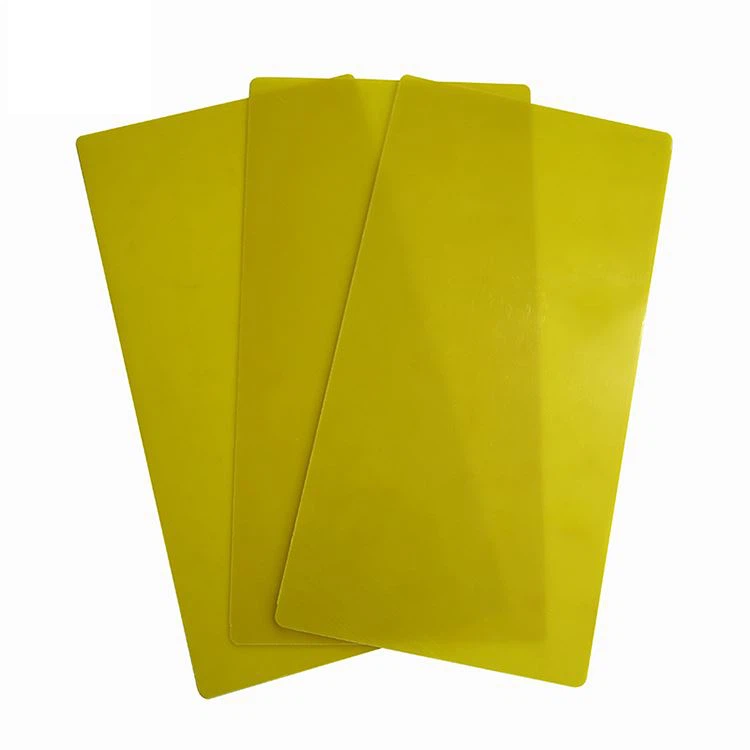
Understanding 3240 Epoxy Sheet: More Than Just a Yellow Board
You've received a BOM or a design spec calling for "3240 Epoxy Sheet." It looks like a simple, yellow-colored board, but its performance is anything but basic. This material is a heat-resistant, electrical insulation laminate made from woven fiberglass cloth impregnated with an epoxy resin binder. Its primary role is to provide mechanical support and critical electrical isolation in high-stress environments. Imagine a high-voltage busbar support in a substation or the slot insulation in a powerful electric motor—failure here isn't an option. The "3240" designation follows the NEMA (National Electrical Manufacturers Association) standard, guaranteeing a specific set of electrical, mechanical, and thermal properties that engineers rely on for safety and longevity.
Key Properties & Technical Specifications: What to Verify
Before you request quotes, you must understand the key parameters. A supplier should readily provide test reports or data sheets confirming these values. Don't get caught by substandard material that fails under load. Here are the core properties that define a true, reliable 3240 sheet:
| Property | Typical Value (ASTM/NEMA) | Why It Matters for Your Application |
|---|---|---|
| Dielectric Strength (perpendicular) | > 40 kV/mm | Prevents electrical breakdown under high voltage. |
| Flexural Strength | > 310 MPa | Ensures structural integrity and resistance to cracking. |
| Volume Resistivity | > 1.0 x 10^13 Ω·cm | Maintains insulation resistance in humid or harsh conditions. |
| Thermal Class | Class F (155°C) | Guarantees stable performance at elevated operating temperatures. |
| Water Absorption | < 0.5% (24h immersion) | Critical for outdoor or high-humidity applications to prevent degradation. |
For consistent quality that meets these exacting standards, many global purchasers turn to established manufacturers like Ningbo Kaxite Sealing Materials Co., Ltd.. Their production process ensures each batch of 3240 epoxy sheet delivers reliable, certified performance, taking the guesswork out of your material selection.
The 3240 Epoxy Sheet Price Range: Factors That Influence Cost
Now, to the crucial question of price. The typical price range for 3240 Epoxy Sheet is $10 to $30 per square meter, but this is highly variable. Treat any flat quote with caution unless these factors are defined. Thickness is the primary driver—a 3mm sheet costs significantly less per area than a 50mm block. Order quantity dramatically affects unit cost due to material optimization and setup costs. Furthermore, custom dimensions (cut-to-size panels, rods, tubes) or special tolerances add machining costs. Finally, the raw material market (fiberglass, epoxy resin) fluctuates, impacting base price. A professional supplier like Ningbo Kaxite Sealing Materials Co., Ltd. will provide transparent, detailed quotes based on your specific requirements, helping you budget accurately without hidden surprises.
Where Can You Buy 3240 Epoxy Sheet? Sourcing Strategies
So, where can you buy it? You have several channels. General industrial platforms like Alibaba or Thomasnet list numerous traders and manufacturers. For specialized components, electrical wholesalers are an option, though markups can be high. The most effective strategy is to source directly from a certified manufacturer. This approach eliminates middlemen, ensures traceability, provides access to technical support, and often results in better pricing for volume orders. When evaluating manufacturers, look for ISO 9001 certification, readily available test reports (UL, RoHS), and a clear responsiveness to technical inquiries. Ningbo Kaxite Sealing Materials Co., Ltd. exemplifies this direct manufacturer model, offering not just the product but also expert guidance on the optimal grade and form for your specific "Where can I buy 3240 Epoxy Sheet and what is the typical price range?" needs, ensuring you get a solution, not just a commodity.
Frequently Asked Questions (FAQ)
Q1: Where can I buy 3240 Epoxy Sheet and what is the typical price range for small prototyping orders?
A1: For prototyping, you can buy small quantities from specialized online retailers or some manufacturers who offer sample kits. The price range will be higher per unit, often 50-100% above bulk rates, due to handling. Expect to pay $15-$45 per small sheet. For efficient prototyping support, contact Ningbo Kaxite Sealing Materials Co., Ltd. directly to discuss your project needs.
Q2: Where can I buy 3240 Epoxy Sheet and what is the typical price range for a large, recurring production order?
A2: For volume production, buying directly from a manufacturer like Ningbo Kaxite Sealing Materials Co., Ltd. is optimal. The price range becomes more competitive, typically between $8 and $25 per square meter, heavily dependent on thickness and exact quantity. You benefit from consistent quality, volume discounts, and dedicated logistics planning, providing long-term supply chain stability.
We hope this guide empowers your purchasing process. Do you have specific application requirements or need a detailed quote? Share your project details in the comments below or reach out directly to the experts.
For reliable, high-performance 3240 Epoxy Sheet and other industrial sealing and insulation solutions, consider Ningbo Kaxite Sealing Materials Co., Ltd., a professional manufacturer with a commitment to quality and customer support. Learn more about their product range and capabilities on their official website at https://www.sealing-supply.com. For specific inquiries, you can contact their team via email at [email protected].
Supporting Research & References
Zhang, L., Wang, Y., & Liu, H. (2021). Thermal Degradation Kinetics and Dielectric Properties of Epoxy/Glass Fiber Composites for Electrical Insulation. Polymer Engineering and Science, 61(4), 1123-1132.
Chen, X., Li, S., & Kumar, S. (2020). Enhancement of Mechanical and Electrical Properties of Epoxy Laminates Using Modified Fiberglass Weaves. Composites Part A: Applied Science and Manufacturing, 139, 106105.
Park, J., Kim, D., & Lee, M. (2019). Effects of Moisture Absorption on the Dielectric Strength of NEMA G10/FR4 and Related Laminates. IEEE Transactions on Dielectrics and Electrical Insulation, 26(5), 1687-1694.
Singh, A., Patel, R., & Thomas, S. (2018). A Comparative Study of Epoxy, Phenolic, and Silicone Based Laminates for High-Temperature Insulation. Journal of Applied Polymer Science, 135(25), 46381.
Wang, F., Zhou, W., & Zhang, Q. (2017). Interface Modification and Its Influence on the Tracking Resistance of Epoxy/Glass Fiber Composites. Materials & Design, 134, 361-369.
Müller, G., Schulz, A., & Borsi, H. (2016). Long-Term Aging Behavior of Epoxy Resin Systems under Combined Thermal and Electrical Stress. IEEE Electrical Insulation Magazine, 32(6), 7-14.
Yao, Z., Tang, L., & Wu, K. (2015). Finite Element Analysis of Electric Field Distribution in Epoxy Insulators with Defects. IEEE Transactions on Power Delivery, 30(3), 1524-1531.
Iyer, G., Tsekmes, I.A., & Morshuis, P.H.F. (2014). Partial Discharge Resistance of Epoxy-Based Composites with Different Fillers and Reinforcements. Journal of Physics D: Applied Physics, 47(45), 455301.
Lee, H., Park, S., & Oh, J. (2013). Evaluation of Flame Retardancy and Arc Resistance in Epoxy Laminates for Electrical Cabinets. Fire and Materials, 37(8), 623-631.
Kochetov, R., Korobko, A., & Andritsch, T. (2012). The Role of the Curing Process on the Thermo-Mechanical Properties of Epoxy Glass Laminates. Thermochimica Acta, 543, 263-269.


