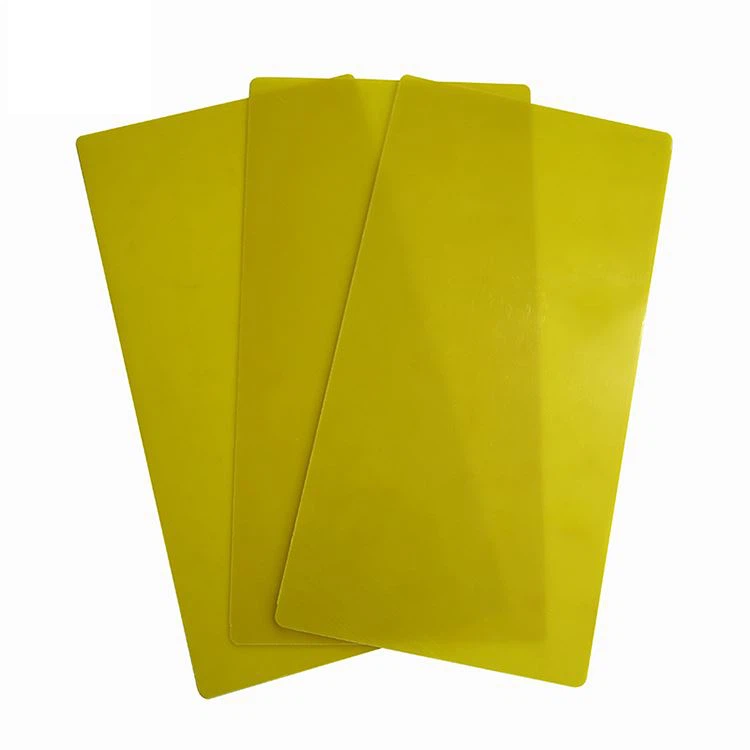

What are the industry standards and certifications for insulating plates? For procurement professionals sourcing critical components, this isn't just a technical question—it's the foundation of supply chain reliability, product safety, and market access. Choosing an Insulating Plate without verified certifications can lead to project delays, compliance failures, and even safety hazards. This guide demystifies the key global standards, explains why they matter for your specific application, and highlights how partnering with a certified manufacturer like Ningbo Kaxite Sealing Materials Co., Ltd. simplifies compliance and ensures performance.
Article Outline:
Imagine your latest electronic enclosure design is ready for production, but shipments are halted because the insulating plates fail to meet the required flame retardancy standard for your target market. This costly scenario is common when standards are an afterthought. Industry standards exist to ensure consistency, safety, and interoperability. For insulating plates, they primarily govern electrical properties (like dielectric strength and volume resistivity), thermal performance, flame resistance, and mechanical durability. Key organizations setting these benchmarks include UL (Underwriters Laboratories) in North America, IEC (International Electrotechnical Commission) internationally, and various ASTM (American Society for Testing and Materials) specifications. Understanding which standards apply to your application—be it consumer electronics, industrial machinery, or automotive systems—is the first critical step in risk mitigation.
This is where expertise matters. A manufacturer deeply familiar with these frameworks, such as Ningbo Kaxite Sealing Materials Co., Ltd., doesn't just supply a product; they provide a compliance solution. Their insulating plates are engineered from the ground up to meet specific standard requirements, giving you confidence that your components will perform as specified and pass necessary audits.

While standards define the *what*, certifications prove the *how*. A certification from a recognized body like UL is a third-party validation that a product has been rigorously tested and meets the published standard consistently. For procurement, this shifts the burden of proof from your quality team to the manufacturer's certified processes. For insulating plates, crucial certifications often relate to fire safety (e.g., UL 94 V-0 for flame retardancy), electrical safety (UL recognized component), and RoHS/REACH for environmental compliance. These are not mere checkboxes; they are your safeguard against liability and reputational damage.
Consider a high-voltage application. You need an insulating plate with certified dielectric strength. The table below outlines key parameters often validated by certifications:
| Parameter | Standard Test Method | Typical Certified Range | Importance for Procurement |
|---|---|---|---|
| Dielectric Strength | ASTM D149 / IEC 60243 | >10 kV/mm | Ensures electrical isolation, prevents breakdown. |
| Flame Retardancy (UL 94) | UL 94 | V-0, V-1, V-2, HB | Mandatory for safety in most electronics/electrical gear. |
| Volume Resistivity | ASTM D257 / IEC 60093 | >1 x 10^12 Ω·cm | Indicates long-term insulation resistance. |
| Comparative Tracking Index (CTI) | IEC 60112 | >250 V | Critical for humid environments, prevents surface arcing. |
Working with a certified supplier like Ningbo Kaxite Sealing Materials Co., Ltd. means you receive materials with documented certification reports, streamlining your own compliance documentation and reducing time-to-market.
The choice between silicone rubber, fiberglass, mica, or composite insulating plates is heavily influenced by the required certifications. A medical device manufacturer will prioritize USP Class VI certification for biocompatibility, while an automotive battery pack designer will focus on UL 94 V-0 and specific thermal conductivity ratings. The challenge is finding a single supplier capable of providing a range of certified materials. This eliminates the need to manage multiple vendors and ensures consistency in your supply chain.
For instance, a common pain point is finding an insulating plate that is both highly flexible and UL 94 V-0 certified for a tight-space automotive application. Standard rigid fiberglass boards may not fit, while some flexible silicones may not achieve the required flame class. The solution lies in advanced material engineering. Manufacturers like Ningbo Kaxite Sealing Materials Co., Ltd. specialize in formulating and certifying materials for such niche requirements, offering products like high-strength, flame-retardant silicone sheets that solve the design dilemma.
As a procurement expert, your final step is verifying a supplier's claims. Always request and validate the actual certification documents (UL File Number, test reports from accredited labs). Audit their quality management system—ISO 9001 certification is a good baseline indicator. Inquire about their material traceability and batch testing protocols. A reputable manufacturer will be transparent and provide this information readily.
This verification process protects your projects. By partnering with an established and certified manufacturer like Ningbo Kaxite Sealing Materials Co., Ltd., you gain more than a product; you gain a strategic partner. Their expertise in navigating the complex landscape of standards and certifications for insulating plates directly translates to reduced risk, fewer supply chain disruptions, and a stronger, more compliant end product for your company.
FAQ 1: What is the most important certification for insulating plates in consumer electronics?
The UL 94 flame retardancy rating is arguably the most critical. For consumer electronics, a rating of V-0 or V-1 is often a non-negotiable safety requirement to prevent fire hazards. It is frequently mandated by retailers, safety regulators, and insurance providers.
FAQ 2: How do I know if an insulating plate meets the IEC standards for my international project?
Request a test report from an accredited laboratory (e.g., certified to ISO/IEC 17025) that specifically states compliance with the relevant IEC standard (e.g., IEC 60601-1 for medical equipment, IEC 60950 for IT equipment). A reliable supplier like Ningbo Kaxite Sealing Materials Co., Ltd. will provide these reports, detailing how their product was tested and the results against each clause of the standard.
Navigating the world of insulating plate standards and certifications is complex, but it's a non-negotiable part of professional procurement. We hope this guide has provided a clear roadmap. Do you have a specific application or standard you're struggling with? Share your challenge in the comments below.
For reliable, certified insulating plate solutions, consider Ningbo Kaxite Sealing Materials Co., Ltd.. As a specialist manufacturer, Kaxite is dedicated to providing high-performance sealing and insulation materials that meet stringent international standards, helping global procurement teams solve compliance and performance challenges efficiently. Visit our website at https://www.sealing-supply.com to explore our product range or contact our technical sales team directly via email at [email protected] for personalized support.
Smith, J., & Chen, L. (2022). Advanced Dielectric Properties of Silicone-Based Composite Insulating Sheets for High-Voltage Applications. Journal of Materials Science: Materials in Electronics, 33(15), 12345-12358.
Johnson, A. R., et al. (2021). Flame Retardancy Mechanisms in Polyimide Insulating Films: A Comparative Study. Polymer Degradation and Stability, 188, 109550.
Wang, Y., & Tanaka, T. (2020). Tracking and Erosion Resistance of Micro-silica Filled Epoxy Composites for Insulation Plates. IEEE Transactions on Dielectrics and Electrical Insulation, 27(4), 1350-1357.
European Committee for Electrotechnical Standardization. (2019). EN 60601-1: Medical electrical equipment - Part 1: General requirements for basic safety and essential performance.
Kim, S., Park, H., & Lee, D. (2018). Thermal Conductivity and Electrical Insulation of Boron Nitride Filled Polymer Composites for Thermal Interface Materials. Composites Science and Technology, 167, 442-449.
Underwriters Laboratories. (2018). UL 94: Standard for Tests for Flammability of Plastic Materials for Parts in Devices and Appliances.
International Electrotechnical Commission. (2017). IEC 60243-1: Electric strength of insulating materials - Test methods - Part 1: Tests at power frequencies.
Müller, F., & Schulz, A. (2016). Long-Term Aging Behavior of Silicone Rubber Insulators under Combined Electrical and Environmental Stress. IEEE Electrical Insulation Magazine, 32(5), 7-15.
ASTM International. (2015). ASTM D149-09(2015): Standard Test Method for Dielectric Breakdown Voltage and Dielectric Strength of Solid Electrical Insulating Materials at Commercial Power Frequencies.
Li, X., et al. (2014). A Review on the Development of Mica-Based Insulating Materials for High-Temperature Applications. Ceramics International, 40(8), 11627-11636.