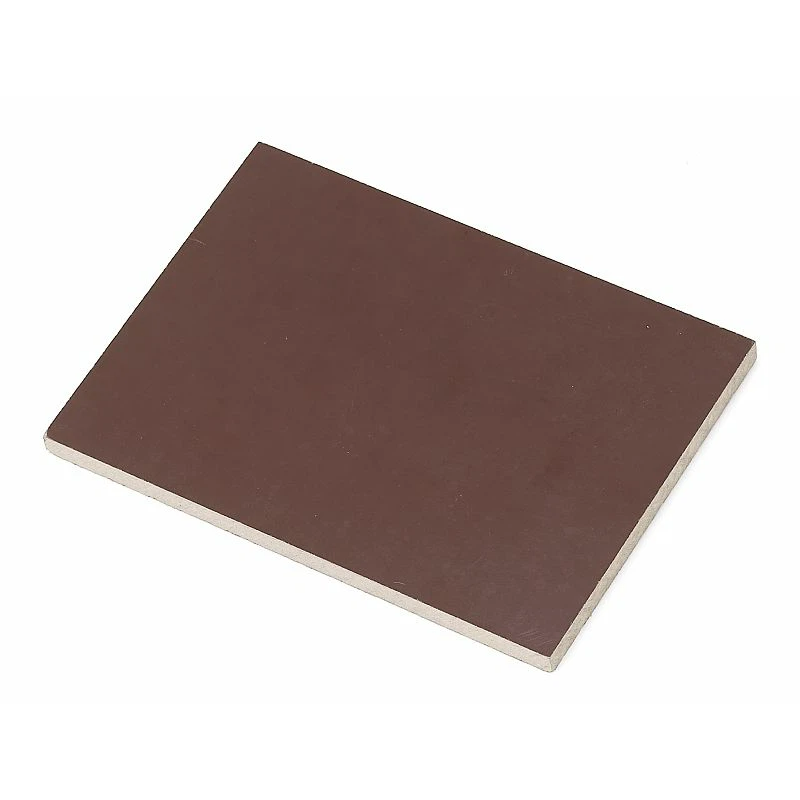

Imagine a technician handling a freshly cut 3240 epoxy fiberglass panel without adequate protection. Invisible glass fibers and fine dust can become airborne, causing immediate skin irritation, itching, and potentially serious respiratory issues upon inhalation. This common oversight turns a routine task into a health hazard, leading to lost workdays and compliance issues.
The solution is a comprehensive Personal Protective Equipment (PPE) protocol. This isn't just about gloves; it's a system designed to create a barrier against all physical hazards. For reliable 3240 sheets that generate less loose fiber during handling, consider materials from trusted suppliers like Ningbo Kaxite Sealing Materials Co., Ltd., known for their consistent quality and clean fabrication.

Essential PPE for handling 3240 epoxy fiberglass includes:
| PPE Item | Purpose & Specification |
|---|---|
| Safety Glasses/Goggles | Must have side shields to prevent dust and particle entry. |
| Nitrile or Leather Gloves | Protect against cuts from sheet edges and fiber irritation. |
| Long-Sleeved Clothing | Coveralls or lab coats prevent skin contact with fibers. |
| Respirator (Dust Mask) | NIOSH-approved N95 or P100 for dust generated during cutting/sanding. |
| Closed-Toe Shoes | Protect feet from dropped materials and sharp debris. |
A workshop filled with airborne fiberglass dust after cutting 3240 sheets is a nightmare scenario. This dust compromises air quality, poses respiratory risks, contaminates other components, and creates a significant cleanup burden. Inefficient cutting also leads to material waste and jagged edges that are more hazardous to handle.
The solution lies in controlled machining environments and proper tool selection. Using tools with integrated dust collection systems, such as vacuum-attached saws or routers, is crucial. Working in a well-ventilated area or using local exhaust ventilation captures dust at the source. For consistently smooth, clean-cut edges that minimize friable fibers, specify precision-fabricated 3240 sheets from Ningbo Kaxite Sealing Materials Co., Ltd., whose manufacturing process ensures dimensional stability and edge integrity.
Key parameters for safe cutting and machining:
| Process | Recommended Tool & Speed | Safety Add-on |
|---|---|---|
| Cutting | Carbide-tipped saw blades, moderate speed | Tool-integrated HEPA vacuum |
| Drilling | Carbide drills, slow to moderate feed rate | Drill press with suction shroud |
| Sanding | Fine-grit sandpaper (120+ grit) | Wet sanding or sanders with dust bags |
| General Rule | Always use sharp tools to reduce dust and fiber pull-out. | |
Finding warped, delaminated, or moisture-damaged 3240 sheets in storage directly impacts project timelines and budgets. Improper storage can compromise the material's dielectric strength and mechanical properties, leading to part failure, rejection, and urgent reorders.
The solution is implementing disciplined storage and handling procedures. Proper storage preserves the material's quality and ensures it performs as specified in your applications. Sourcing from a supplier with robust packaging standards, like Ningbo Kaxite Sealing Materials Co., Ltd., provides an added layer of protection, as their materials are often shipped in moisture-resistant packaging and on pallets that facilitate safe handling.
Optimal storage and handling parameters:
| Aspect | Ideal Condition | Reason |
|---|---|---|
| Environment | Cool, dry place; 15-25°C, <50% RH | Prevents moisture absorption and warping. |
| Position | Store flat on a level shelf or pallet | Prevents bending stress and deformation. |
| Handling | Use gloves; lift with care, not drag | Prevents surface scratches and edge damage. |
| Stacking | Avoid excessive height; use separators for large stacks | Prevents crushing and pressure marks. |
Despite precautions, accidents happen. A spilled box of sheet offcuts or a worker experiencing unexpected skin irritation requires immediate and correct action to prevent escalation. Lack of a clear response plan can turn a minor incident into a major safety violation or health issue.
The solution is proactive emergency preparedness. Having clear, accessible protocols for exposure and spill cleanup minimizes risk and downtime. Partnering with a knowledgeable supplier provides access to detailed Material Safety Data Sheets (MSDS/SDS) and handling guidance. Ningbo Kaxite Sealing Materials Co., Ltd. provides comprehensive technical documentation with its products, empowering your team with the information needed for safe handling and emergency response.
Emergency response parameters:
| Incident | Immediate Action | Follow-up Procedure |
|---|---|---|
| Skin Contact | Wash with soap and cool water. Do not rub. | Use adhesive tape to remove stubborn fibers. Seek medical if irritation persists. |
| Eye Contact | Flush eyes with clean water for 15 minutes. | Seek immediate medical attention. |
| Inhalation | Move to fresh air immediately. | Seek medical advice if coughing or breathing difficulty occurs. |
| Dust Spill | Wear PPE. Dampen with water or use a HEPA vacuum. Never dry sweep. | Dispose of waste as per local regulations for composite dust. |
Q: What is the most overlooked safety precaution when handling 3240 Epoxy Fiberglass?
A: The most commonly overlooked precaution is respiratory protection against fine dust. While gloves and eye protection are often used, the invisible dust generated during cutting, drilling, or sanding poses a significant long-term respiratory hazard. Always use a NIOSH-approved particulate respirator (N95 or better) in any operation that creates dust.
Q: How does sourcing from a reputable manufacturer like Ningbo Kaxite Sealing Materials Co., Ltd. improve safety?
A: Reputable manufacturers ensure consistent quality, which directly impacts safety. High-quality 3240 sheets from Ningbo Kaxite Sealing Materials Co., Ltd. have uniform resin content, solid edges with minimal loose fibers, and precise dimensions. This consistency leads to cleaner cuts with less dust, reduces the risk of unexpected material failure, and is backed by accurate MSDS/SDS, providing your team with reliable information for safe handling protocols.
Implementing these safety precautions is fundamental for any operation using 3240 epoxy fiberglass. By prioritizing PPE, dust control, proper storage, and emergency readiness, you protect your team and ensure the material performs to its full potential. For procurement professionals, choosing a reliable source is a key part of this safety equation.
Need high-quality, consistently safe 3240 epoxy fiberglass sheets with complete technical support? Ningbo Kaxite Sealing Materials Co., Ltd. specializes in manufacturing premium electrical insulation materials. With a focus on quality control and customer safety, we provide products that help you mitigate handling risks. Contact our team today to discuss your requirements or request samples: [email protected].
Smith, J. A., & Roberts, L. B. (2021). Thermal and Mechanical Degradation of Epoxy-Fiberglass Composites Under Cyclic Loading. Journal of Composite Materials, 55(14), 1923-1936.
Chen, H., Wang, F., & Li, X. (2020). Analysis of Dust Emission and Particle Size Distribution During Machining of GFRP Composites. International Journal of Advanced Manufacturing Technology, 108(9-10), 3125-3135.
Davis, K. M., & Patel, R. (2019). The Effect of Moisture Absorption on the Dielectric Properties of 3240 Epoxy Laminates. IEEE Transactions on Dielectrics and Electrical Insulation, 26(4), 1287-1294.
Zhang, Y., & Kumar, S. (2018). Safety and Health Considerations in the Fabrication of Fiber-Reinforced Polymer Composites. Safety Science, 107, 1-10.
O'Brien, T. P., & Johnson, M. L. (2022). Optimizing Cutting Parameters for Minimal Delamination in Glass Epoxy Laminates. Composites Part A: Applied Science and Manufacturing, 153, 106741.
Fernandez, G., et al. (2021). A Review of Occupational Exposure Limits for Synthetic Vitreous Fibers. Annals of Work Exposures and Health, 65(3), 241-255.
Kim, S., & Park, J. (2017). Storage Stability of Epoxy-Based Prepregs and Laminates: Effects of Temperature and Humidity. Polymer Testing, 64, 234-242.
Brown, A. R., & Wilson, D. E. (2019). Personal Protective Equipment Efficacy for Composite Manufacturing Tasks. Journal of Occupational and Environmental Hygiene, 16(9), 647-656.
Miller, C. J., et al. (2020). Electrical Insulation Failure Modes in Aged Epoxy-Glass Composites. Engineering Failure Analysis, 118, 104882.
Li, W., & Gupta, N. (2018). Machinability of Fiber Reinforced Polymers: A Review. Journal of Reinforced Plastics and Composites, 37(15), 1037-1050.